Duty-Free Whisky Sales Fell Too, But the Cause Differs From the Domestic Market's Slump
2026-07-26 10:01 PMSpirits & Wine
Overview
Diageo Korea has opened voluntary retirement for the second time in two years, and Pernod Ricard Korea's operating profit collapsed 71.6%. Duty-free whisky sales are also down 10%–30% year-over-year. But look at both companies' global results, released around the same time, and it becomes clear the parent-company crisis (Diageo: US tequila; Pernod Ricard: Chinese cognac and travel retail) and the Korean subsidiaries' crisis (a highball-driven collapse in mass-market whisky) are two entirely separate events.
Diageo Korea has been accepting voluntary retirement applications company-wide since July 20 — its second round of layoffs in two years, following the 2024 cuts. The terms have also worsened: severance pay dropped from KRW 30 million last year to KRW 20 million this year. Pernod Ricard Korea's revenue fell 31.1% and its operating profit collapsed 71.6%. Golden Blue's revenue slid from KRW 232.3 billion in 2022 to KRW 168.7 billion in 2025. Whisky import value fell 9.0% last year, and import volume fell 17.7%. Media coverage sums this up as "a slump in the whisky industry." Yet over the same period, sales of premium single-malt whisky priced above KRW 100,000 rose 126% year-over-year in Korea's domestic liquor market, and single malt became the single best-selling category across all spirits. Collapse and explosive growth are happening at the same time. By that logic, duty-free whisky counters should be thriving on the back of this growing premium line. Yet according to duty-free industry sources, duty-free whisky sales are also down 10%–30% year-over-year. Mass-market retail and duty-free have declined side by side, but dig into why, and the two are telling completely different stories.
What Happened — Importers' Results Have Collapsed
The recent results of Korea's whisky importers and distributors, reported July 23, are as follows.
Company
Metric
Figure
Diageo Korea
Revenue
KRW 160.6 billion (-1.2%)
Diageo Korea
Operating Profit
KRW 9.4 billion (-48.1%)
Pernod Ricard Korea
Revenue
KRW 120.7 billion (-31.1%)
Pernod Ricard Korea
Operating Profit
KRW 15.1 billion (-71.6%)
Golden Blue
Revenue
KRW 168.7 billion (2025, continuing decline from KRW 232.3 billion in 2022)
Golden Blue
Operating Profit
KRW 21.6 billion (-36.3%)
Over the same period, nationwide whisky import value fell to $226.82 million (-9.0%), and import volume fell to 22,582 tons (-17.7%). Diageo Korea began accepting voluntary retirement applications on July 20, offering up to 36 months' salary and a KRW 20 million severance payment (down from KRW 30 million a year earlier). Industry observers point to consumer belt-tightening amid high prices, declining corporate entertainment and after-work drinking demand, and the mainstreaming of the highball (whisky mixed with soda water or other mixers) as reasons the very model of "selling a single bottle of premium whisky" is under pressure.
Core Insight 1 — What Weakened Sharply Isn't the Whole Market, But One Axis: "Highball-Grade" Whisky
A closer look at the numbers shows the phrase "whisky industry slump" isn't quite accurate. Revenue from blended whisky priced KRW 20,000–40,000 — mostly consumed as highball material — fell roughly 30%. Meanwhile, sales of premium single-malt whisky priced above KRW 100,000 rose 126% year-over-year. Single malt's share of total whisky sales reached 61%, up 15 percentage points from a year earlier, and single malt as a standalone category overtook wine to become the top-selling category across all spirits. At convenience store chain CU, the average purchase price in the online whisky category jumped 22.7% year-over-year in the first half. Analysts attribute this to the spread of "authentic whisky consumption" — particularly among men in their twenties — favoring premium products over cheap, high-volume consumption.
In other words, what's happening now isn't the collapse of whisky as a category, but a reshuffling in which the mass-market, highball-oriented segment collapses while the premium segment takes its place. The problem is that earnings releases from importers like Diageo Korea and Pernod Ricard Korea don't show this structure as it actually is. These companies don't disclose revenue and operating profit broken out by segment. So a headline like "operating profit down 71.6%" makes it look like the entire business is collapsing, when in reality, while the highball-oriented line sold through mass retail channels (supermarkets, convenience stores, liquor specialty shops) is collapsing, the premium line is likely telling a different story.
Duty-Free Spirits Highlights — Down, But Not Because of Demand
This is where duty-free becomes important. The flagship, best-selling items at duty-free spirits counters are ultra-premium lines — Johnnie Walker Blue, Ballantine's 30 Year, Royal Salute 25 Year, and Suntory's Hakushu, Hibiki, and Yamazaki. These fall precisely within the one segment currently growing in Korea's domestic liquor market — premium single malt and high-end blended whisky priced above KRW 100,000. By that logic, duty-free whisky sales should be rising too.
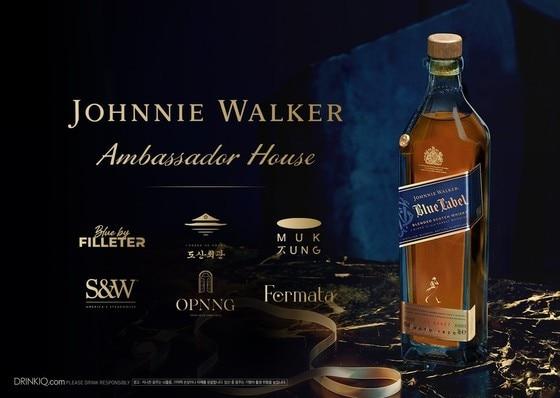
Diageo's Johnnie Walker Blue Label Ambassador House campaign — a flagship premium line anchoring duty-free spirits counters
Yet according to duty-free industry sources, the actual result was the opposite. Duty-free whisky sales fell 10%–30% year-over-year. While the Korea Duty Free Shops Association and individual duty-free operators don't officially disclose detailed spirits category growth figures, this industry-sourced decline looks, at first glance, similar in magnitude to the decline at mass-market distributors (the highball segment down roughly 30%, and as much as 70%-plus for entire companies). But dig into this decline, and three factors are layered in that are quite different in character from the collapse in mass retail.
First, bestsellers favored by domestic consumers — Johnnie Walker Blue, Ballantine's 30 Year, Royal Salute 25 Year — are still selling well at duty-free. This isn't a crisis born from specific popular products losing demand. Second, that said, it's also true that the market itself is genuinely shrinking as younger consumers' whisky purchases decline overall, meaning the duty-free decline can't be explained purely as an optical illusion (a base effect) — some genuine demand weakness is mixed in. Third, on top of that, there's a supply-side variable. When Incheon International Airport Corporation opened Incheon Airport's new Smart Duty Free store last year, it ran a large-scale discount promotion on spirits — but this year, with a smaller budget, that promotion has been scaled back. At the same time, traditional spirits brands like Pernod Ricard and Diageo are capping duty-free promotional discount rates at under 30% to protect domestic price stability, a restriction that has tightened further this year compared to last. With the airport corporation's budget cut and the brands' discount-rate controls moving in the same direction, duty-free operators now have less room than last year to drive up sales on their own.
The price advantage created by Korea's liquor tax structure remains intact regardless of these promotional variables. Because higher-priced spirits carry a heavier tax burden, duty-free sells at prices with that tax stripped out entirely. As a result, duty-free whisky prices fall to roughly half of retail prices. Popular whiskies like Johnnie Walker Blue, Ballantine's 30 Year, and Royal Salute 25 Year sell for roughly KRW 70,000–100,000 less than retail, and Moutai (500ml), which retails for KRW 600,000–700,000, sells for around KRW 360,000 at duty-free.
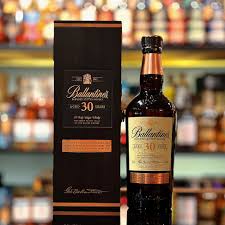
Ballantine's 30 Year — one of the flagship products that sells for roughly KRW 70,000–100,000 less than retail thanks to duty-free's tax advantage
The problem is that this structural advantage hasn't yet fully translated into sales growth, because the double constraint of the airport corporation's budget and the brands' discount-rate ceilings is holding back that effect.
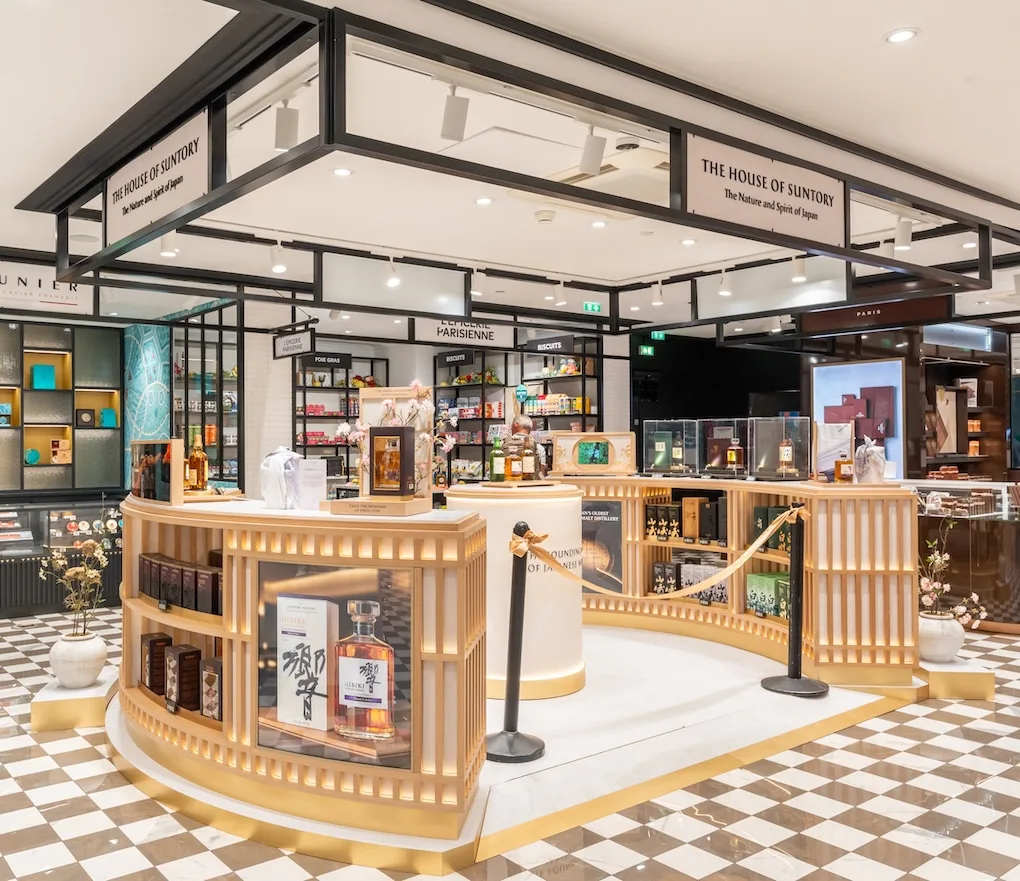
A supply issue has piled on top of this. After the story spread that Nvidia CEO Jensen Huang gifted a bottle of Hakushu 25 Year, the entire Hakushu lineup went into shortage. Suntory's three flagship whiskies — Hakushu, Hibiki, and Yamazaki — face an announced price increase of up to 20% starting next April, driving a rush of pre-increase demand. Duty-free operators are also adjusting to this premium trend by expanding exclusive products — Lotte Duty Free, for instance, runs an exclusive collaboration with Taiwanese whisky brand Kavalan. In sum, duty-free is currently the channel selling the one segment of Korea's spirits market that's genuinely expanding — premium single malt and high-end whisky — at the most tax-advantaged prices available. But for that advantage to show up in sales, a separate variable — promotional budgets — needs to normalize first.
Core Insight 2 — Even the Same "Decline" Carries Very Different Odds of Recovery
There's an easy trap here. Looking only at the magnitude of the decline in mass retail (roughly -30%, the highball segment) and duty-free (-10% to -30%), it's tempting to lump both into a single story: "whisky just isn't selling anywhere." But the two declines differ substantially in character. The decline in mass retail is a structural demand shift driven by the highball trend taking hold. Because the way consumers drink has genuinely changed, piling on more promotions won't bring cheap blended whisky back into fashion. Duty-free's decline is more complex — some of it reflects genuine demand weakness from younger consumers buying less whisky, but layered on top are two supply-side constraints: Incheon Airport Corporation's reduced promotion budget and brands tightening their discount-rate caps. Given that bestsellers themselves are still selling well, much of this decline looks less like "it isn't selling" and more like "the selling conditions got worse than last year."
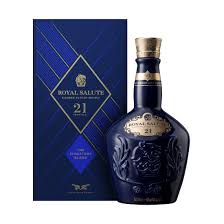
Royal Salute — alongside Johnnie Walker Blue and Ballantine's 30 Year, one of the consistent bestsellers at duty-free
A similar question can be raised about Diageo Korea's and Pernod Ricard Korea's results. Both companies carry brands like Johnnie Walker, Ballantine's, and Royal Salute across a wide range from premium to mass-market lines. Whether this earnings collapse reflects a genuine company-wide crisis, or is concentrated in the highball-oriented mass line (cheap blended whisky sold through supermarkets, convenience stores, and liquor specialty shops), is hard to confirm unless the companies break out revenue by channel and grade. There's an interesting irony here — the very brands, Diageo and Pernod Ricard, are themselves tightening discount-rate caps in duty-free, the one channel where their premium lines are actually growing. Company-wide results are collapsing under the weight of the highball slump, and even the channel that's holding up (duty-free) is having its growth room self-restrained in the name of defending domestic pricing. Duty-free operators like Lotte and Hyundai face a similar calculus. Given the heavy rents they pay at Incheon Airport, protecting margins takes priority, so they're choosing to scale back discount promotions rather than expand them. None of the three parties — brands, operators, or the airport corporation — currently has an incentive to increase discounts.
Core Insight 3 — The Parent Company's Crisis and the Korean Subsidiary's Crisis Are Different Events
Diageo and Pernod Ricard's global fiscal 2026 results, released in August, answer this question. What shook Diageo's global results (organic revenue -2.0%) wasn't whisky — it was US tequila. North America, 37% of total revenue, declined 8.4%, and Don Julio (-19%, a 60.9-point swing from +41.9% growth a year earlier) and Casamigos (the decline widening from -18% to -28%) account for most of it. Nowhere in newly appointed CEO Dave Lewis's stated turnaround priorities — brand relevance, customers, an agile operating model — was there any mention of travel retail or the Asian whisky market. Pernod Ricard's global results (nine-month cumulative revenue -4.4%) had the opposite cause — Chinese anti-dumping tariffs on EU brandy effectively shut Martell cognac out of China's duty-free channel for roughly 18 months, and that was the decisive blow.
Neither of these two events has any direct connection to the highball trend in Korea's domestic whisky market. Diageo Korea's earnings collapse (revenue -1.2%, operating profit -48.1%) and Pernod Ricard Korea's collapse (revenue -31.1%, operating profit -71.6%) aren't the parent companies' crises spilling straight over into Korea — they're separate events specific to the Korean market. While headquarters wrestles with US tequila (Diageo) or Chinese cognac and travel retail (Pernod Ricard), the Korean subsidiaries are going through entirely separate crises for an entirely different reason: the collapse of the mass-market whisky segment driven by the highball trend. Reading a headline like "Diageo is struggling" or "Pernod Ricard is struggling" without distinguishing whether it's a parent-company issue or a Korea-specific one conflates two completely different events into one. That said, this layering of two separate crises also helps explain why these brands keep a conservative posture — tightening discount caps — even in the one channel where they're actually growing, premium whisky at Korean duty-free: with headquarters focused on cost-cutting and restructuring, it's a harder environment for an individual country subsidiary to push aggressively into margin-eroding promotions.
Business Impact — A Time for Reallocating Channels, and the Wildcard of Promotional Budgets
The choice facing importers is relatively clear. Rather than continuing to pour resources into the mass-market highball line through supermarkets, convenience stores, and liquor specialty shops, they should reallocate resources toward strengthening supply of ultra-premium lines through duty-free and premium retail channels. But this transition has a lag. The highball-oriented line is already deployed across many distribution networks, and its revenue decline hits the books immediately, while the shift toward premium lines takes time for brand-building and supply-chain adjustment. Diageo Korea's latest round of voluntary retirement can be read as a cost of this transition period.
There's an additional variable specific to the duty-free channel. This case shows that duty-free whisky sales depend heavily on two external variables — the size of Incheon International Airport Corporation's promotion budget, and the discount-rate caps set by the brands. Neither variable shows a clear sign of easing within this year. The airport corporation's budget for this year is already finalized and isn't structured to be expanded further. For the market to grow, then, duty-free operators Lotte and Hyundai would need to run more aggressive discount promotions with their own funds — but they're moving in exactly the opposite direction, holding to a policy of trimming discount margins given the heavy rent burden at Incheon Airport. In RIT's view, this is the most frustrating part of this case — the airport corporation has no budget, the operators are cutting discounts because of rent pressure, and the brands are tightening discount-rate caps. None of the three currently has an incentive to push sales up right now, so it's reasonable to expect duty-free whisky sales are unlikely to grow meaningfully within this year.
Diageo Korea's voluntary retirement and Pernod Ricard Korea's sharp profit decline are easy to summarize as "a crisis in the whisky industry," but what's actually in crisis is only the mass-market, low-price whisky line squeezed out by the highball trend. Miss the fact that entirely different causes sit behind numbers moving in the same direction — layered across both the parent-company level and the Korean-subsidiary level — and you only see half the real picture of this industry.
✦RIT's Insights
What's most worth noting in this case is how much the phrase "whisky industry slump" obscures. It's true that importers' operating profits have been cut sharply, but the moment that single number is used to conclude the entire whisky category isn't selling, the opposite truth gets missed — premium single malt grew 126% and rose to become the top-selling category in spirits. When the headline number and the segment number tell such different stories, market-wide segment data deserves a look before company-level aggregates do. In practice, this principle applies just as directly to investment and analyst work as it does to spirits import and distribution. Before taking comfort or alarm from a headline that a company's overall results have weakened sharply, the collapse needs to be separated out — whether it came from the mass line or the premium line, from mass retail or the duty-free channel. As long as companies don't disclose revenue broken down by channel and grade, judging the future from a single line like "operating profit plunged" isn't enough; separately sourcing segment-level market data and mapping it onto the company's numbers is worth the extra effort.
The first read of this setup pointed toward concluding that "duty-free is quietly benefiting from the premium segment." But the actual duty-free sales figures confirmed with industry sources ran the opposite way — down 10%–30%. The initial instinct was to chalk this decline up entirely to a base effect created by Incheon Airport Corporation's promotion-budget cut. But a bit more digging showed a more complicated picture — bestsellers were still selling well, and genuine demand weakness among younger consumers was also mixed in. And above all, brands like Pernod Ricard and Diageo were tightening duty-free discount-rate caps on their own, more aggressively than last year.
This last point is the most interesting. These companies' overall results are collapsing under the highball trend, yet in the one channel where they still have real room to grow — duty-free — they're tying their own hands. And the odds of untying those hands anytime soon aren't especially encouraging. Incheon Airport Corporation's budget for this year is already locked in, with no structure for additional funding. For the market to grow, duty-free operators Lotte and Hyundai would need to increase discounts on their own — but given the heavy rent burden at Incheon Airport, they're holding to a policy of cutting discounts instead. With the airport corporation, the operators, and the brands all pointing in the same direction — less discounting — for their own separate reasons, it's reasonable to expect duty-free whisky won't see meaningful growth within this year. At this point, then, both the narrative that "duty-free is benefiting from the premium trend" and the narrative that "duty-free whisky is also in a slump" are only half right. More precisely: it's a structure that could benefit, but none of the three parties who'd need to turn that structure into actual sales currently has an incentive to do so.
Checking Diageo's and Pernod Ricard's global results side by side after drafting this piece left the impression that the original hypothesis had been validated once more. Reading Diageo Korea's crisis as "headquarters is struggling, so Korea must be too" falls apart once Diageo's real global problem turns out to be US tequila. Pernod Ricard tells the same story — headquarters is wrestling with Chinese cognac and travel retail, but Pernod Ricard Korea's collapse has nothing to do with that; it's a result of the domestic highball trend. This case is a good reminder of just how often it's a mistake to lump a global company's headquarters-level event together with an individual country subsidiary's event when reading a multinational's crisis.
DART electronic disclosure system (dart.fss.or.kr) — Diageo Korea, Pernod Ricard Korea, and Golden Blue's audit reports (cited by name where a specific filing URL could not be pinpointed)