Diageo -2%, Pernod Ricard -4.4% — Same Decline, Different Causes
2026-08-17 8:20 AMSpirits & Wine
Overview
Diageo, the world's largest spirits company, posted FY2026 sales down 2.0% and cut its dividend in half. No. 2 Pernod Ricard's own nine-month cumulative sales are also down 4.4%. The headlines read like the same story — a "spirits slump" — but Diageo's decline traces back to collapsing US tequila demand, while Pernod Ricard's traces back to China's travel-retail and cognac channel being shut down. Two completely different risks hiding behind the same-looking decline rate.
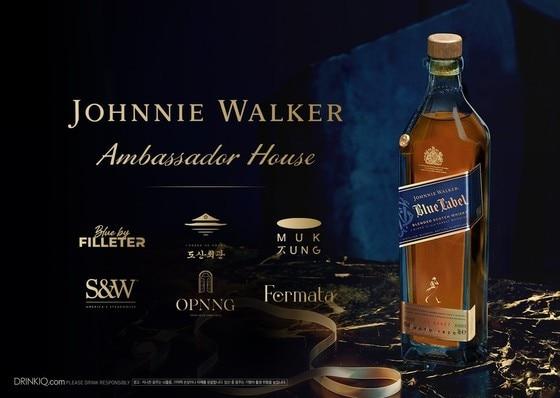
On August 6, Diageo — owner of Johnnie Walker, Guinness, and Smirnoff, and the world's largest spirits company — reported results for fiscal year 2026 (July 2025 to June 2026). Sales were down 2.0% on an organic basis, and the dividend was cut by more than half versus the prior year. Yet the stock jumped nearly 8% on the day of the announcement. The same day, the fact that No. 2 Pernod Ricard's own nine-month cumulative sales were also down 4.4% came to light, and headlines naturally followed declaring that "the entire global spirits market is shaking."
That's not wrong, exactly. But lay the two companies' results side by side and the story changes. Diageo's weakness is the result of American consumers drinking less tequila; Pernod Ricard's weakness is closer to the result of no longer being able to sell cognac at Chinese airport duty-free stores. One is a pure consumption-trend problem; the other is a risk operating on a completely different layer — travel retail and trade policy. Lump both events together under the single word "decline," and the travel-retail industry misses the signal it should actually be paying attention to.
Diageo — Dividend Cut in Half, Stock Up Anyway
Start with Diageo's FY2026 scorecard.
Metric
Figure
Net sales
US$19.643B, organic -2.0% / reported -3.0%
Organic operating profit
+2.0%, margin +116bp
Reported operating profit
-27.2%
North America (37% of total)
US$7.2B, -8.4%
Europe
Organic +3.4% (net sales +5.7%)
Asia Pacific
Slight decline
Africa
+13.3%
Latin America & Caribbean
+7.7%
Full-year dividend per share
50 cents (down ~52% from 103.48 cents the prior year)
The standout number is North America. The region accounts for 37% of total sales, and it alone declined 8.4% — with tequila at the center of it. US tequila sales fell roughly 21% year over year. Don Julio swung from +41.9% growth the prior year to a 19% decline, a 60.9-percentage-point reversal. Casamigos, already down 18%, saw that decline deepen to 28%. The premium tequila boom that exploded in the US during the pandemic years is unwinding, and Diageo is absorbing the full rebound effect.
Europe, by contrast, grew (organic +3.4%), driven by strong Guinness performance in Great Britain and Turkey — though within the region, Central & Eastern Europe (-4.9%), Iberia (-7.5%), and France (-3.5%) all pulled back. Asia Pacific slipped only slightly, as weakness in the Chinese white-spirits brand Shui Jing Fang offset modest growth in premium spirits. The regional picture is uneven, but the single factor dragging down the group's overall results is unmistakably US tequila.
The reported operating profit drop to -27.2% has a separate cause. Hyperinflationary accounting treatment in Turkey and the write-down of the Don Papa brand, among others, generated US$1.5B in impairment charges, on top of US$0.9B in restructuring costs tied to building out the new operating framework. Organic operating profit actually grew 2.0% — it's the one-off charges that crushed the reported number.
Behind the Dividend Cut — the New CEO's "Reset"
Diageo has had three different CEOs in the past three years. Dave Lewis (formerly of Tesco and Unilever), who took over in January, paired this results announcement with a US$1.2B turnaround plan. Its core: roughly US$1B in cost savings over three years (US$540M already realized in FY26 alone) and a leaner organization. The dividend policy changed too — where Diageo previously paid out about 63% of earnings as dividends, it has now adopted a new floor policy of "30-50% of earnings, with an annual minimum of 50 cents." The result: the annual dividend fell from 103.48 cents to 50 cents, a cut of more than half.
That's why a company that just cut its dividend in half saw its stock rise nearly 8% the same day. The market welcomed not the dividend cut itself, but the fact that a company carrying US$21.7B in net debt had finally laid out a clear principle for where its cash will go. The announcement also came with a deleveraging plan built on asset sales, including the disposal of its East African Breweries (EABL) stake for US$2.3B. CEO Lewis emphasized three priorities — brand relevance, customers, and an agile operating model — and notably, nowhere in the announcement was there any specific mention of travel retail or the duty-free channel. Diageo's crisis was, through and through, a problem of US domestic consumption trends.
Pernod Ricard — When Cognac Got Shut Out, So Did Results
Pernod Ricard's scorecard over the same period tells a different kind of story.
Period
Net Sales
Organic Growth
Notes
FY2025 (Jul 2024–Jun 2025)
€10.959B
-3.0%
Weakness in China, US, GTR Asia
H1 FY26 (Jul–Dec 2025)
€5.253B
-5.9%
Double-digit declines in Martell, Havana Club
Q3 FY26 (Jan–Mar 2026)
€1.945B
+0.1%
Entering stabilization
9M FY26 cumulative
€7.199B
-4.4%
—
In its FY2025 results, Pernod Ricard explicitly named "China, the US, and GTR Asia (Global Travel Retail Asia)" as the source of its weakness — with cognac, effectively shut out of China's duty-free channel since December 2024, as the decisive blow. That pattern continued into H1 FY26, when Martell cognac sales fell 17% on China-driven weakness and Havana Club rum also posted a double-digit decline. Group-wide sales did rebound to +0.1% by Q3, a sign of stabilization — but a new variable, travel disruption tied to conflict in the Middle East, emerged, and Pernod Ricard cut its FY26 full-year guidance to a 3-4% organic decline. The company also noted that, excluding the US and China, the rest of its markets grew 5% in Q3 — meaning the weakness is concentrated in two specific markets (the US and China) and one specific channel (travel retail).
Diageo's portfolio includes Johnnie Walker, Guinness, and Smirnoff, but no cognac brand like Hennessy or Martell
Key Insight — Portfolio Composition Made the Difference
Line up the two decline rates — Diageo -2.0%, Pernod Ricard -4.4% — and it's tempting to conclude simply that "Pernod Ricard had it worse." But look at the causes, and this isn't a gap in management skill so much as a gap in portfolio composition.
China launched an anti-dumping investigation into EU brandy in January 2024 and, in July 2025, imposed tariffs of up to 34.9% (later reduced to 32.2%) for a five-year term. Thirty-four companies — including Rémy Martin, Martell, and Hennessy — were exempted from the duty as long as they held to pledged minimum prices. But during the roughly 18 months the investigation was underway, cognac was effectively pushed out of China's duty-free channel altogether. Only in 2026 did the situation begin to ease, with a zero-tariff policy for Hainan Free Trade Port residents (effective March 2026) helping the category gradually recover.
The companies that took the direct hit were the ones holding cognac houses — Pernod Ricard (Martell) and LVMH (Hennessy). Diageo, by contrast, has no meaningful cognac brand in its portfolio to begin with — its center of gravity is Johnnie Walker (Scotch), Don Julio and Casamigos (tequila), Smirnoff (vodka), and Guinness (beer). In other words, Diageo didn't "dodge" the travel-retail risk in this episode so much as it simply had no product exposed to that risk in the first place. Conversely, the US tequila collapse that hammered Diageo was a relatively small category for Pernod Ricard, and barely registered. The two companies declined in the same period, but they were, in effect, sitting different exams.
What Travel Retail Should Take Away
The implication for Korea's duty-free and travel-retail industry is clear. When a headline says "a global spirits giant is struggling," it's a separate question entirely whether that actually touches any specific brand or category on your own shelves. Diageo's -2.0% decline has almost nothing to do with the Johnnie Walker or Guinness shelf at a Korean duty-free store. Pernod Ricard's weakness, on the other hand, is directly tied to the cognac and premium-category mix that actually sits on those shelves — Martell, Absolut, and others — and has likely already affected Korean duty-free operators' cognac allocation and promotion planning.
✦RIT's Insights
The most striking part of this comparison is that Diageo's stock rose even after it cut its dividend in half. It reads as a signal that the market cares less about results being bad on their own and more about whether the company understands exactly why and is responding to it. At a company on its third CEO change in three years, a clear dividend policy paired with a concrete restructuring plan can become the starting point for rebuilding trust — a lesson worth noting for Korean retail and consumer-goods companies too. For finance and IR teams, the takeaway is clear: when explaining weak results, presenting the principle behind the numbers — the cause and the response plan together — earns more market trust than the direction of the numbers alone.
The Pernod Ricard case deserves even closer attention. A single category, cognac, was effectively pushed out of the travel-retail channel for nearly 18 months because of one country's trade policy — a vivid illustration of how much risk sits in category concentration tied to a single country or channel. What concerns RIT here is that Korean duty-free stores still carry heavy dependence on a single nationality of customer (Chinese) and a narrow set of categories (cosmetics, luxury). Having watched the cognac-China-travel retail combination collapse, it seems more necessary than ever to regularly check what share of revenue is concentrated in which brand and which customer nationality. Buyers and procurement teams should go a step further and get ahead of a supplier's portfolio composition — whether it holds a cognac house, for instance — so they can anticipate which brands would be caught up if a trade dispute flares up in a given country. Category managers, for their part, should keep managing for volume volatility through the second half of 2026, since China's tariff risk on cognac hasn't fully resolved, while tequila is a separate case — its fate hinges on a US market recovery, so it has comparatively little bearing on Korean duty-free volumes.
Finally, both companies showed signs of stabilizing in Q3 — Diageo's improving organic operating profit and Pernod Ricard's +0.1% rebound. The pace and shape of recovery will differ, though. Diageo faces a fight to revive an entire category through US tequila price cuts and new marketing, while Pernod Ricard faces a different fight: watching how quickly a China trade risk that has already begun to ease makes its way back onto the shelf. This is also why duty-free MD and buying teams should check what specifically declined, rather than the headline growth rate, when reading a supplier's earnings release. Consumption-trend weakness like Diageo's may have nothing to do with your own channel, while channel- or policy-driven weakness like Pernod Ricard's directly affects allocation and promotion. When reading next quarter's results, the more accurate question won't be whether sales declined again, but what specifically recovered, and by how much.