Adjusted EPS Up 66%, a Fourth Straight Beat — Estée Lauder's Hainan Recovery
2026-08-20 5:50 PMCosmetics & Perfumes
Overview
Estée Lauder posted Q4 FY2026 net sales of $3.63B (+5%) and adjusted EPS of $0.39, beating consensus for a fourth straight quarter. Full-year adjusted EPS surged 66% year over year to $2.51. The interesting part is the timing — right as L'Oréal said its own Hainan business was 'not yet recovered' for the same quarter, Estée Lauder's Hainan business had already rebounded with double-digit growth.
On August 19, The Estée Lauder Companies reported results for the fourth quarter of fiscal 2026 (July 2025–June 2026). Net sales came in at $3.63B, above the $3.54B Wall Street expected, and adjusted earnings per share (EPS) of $0.39 beat the $0.32 consensus by $0.07 — a fourth consecutive quarter of beating estimates. The stock jumped 16% on the day of the announcement. As it happens, barely two weeks earlier, L'Oréal had reported results for that very same quarter (April–June) and said that mainland China travel retail — the core channel for its Luxe division — was "not yet recovered." Same market, same quarter — and the two companies' stories are exact opposites.
Four Straight Beats — the Turnaround, by the Numbers
Start with Estée Lauder's fiscal 2026 scorecard.
Metric
Q4 (Apr–Jun '26)
Full Year (FY2026)
Net sales
$3.63B
$15.0B (+5%)
Organic net sales growth
+5%
+3%
Adjusted EPS
$0.39 (+$0.07 vs. estimate)
$2.51 (+66% vs. prior year's $1.51)
Gross margin
—
+150bp
Adjusted operating margin
—
+320bp
A year ago, this was a different company. In fiscal 2025, Estée Lauder booked $1.29B in combined goodwill and intangible-asset impairment charges — $295M tied to Tom Ford and Too Faced, plus $375M tied to Dr.Jart+ in the fourth quarter alone — and operating margin fell sharply from 6.2% the prior year to -5.5%. Because this quarter's 66% jump in adjusted EPS excludes those one-off impairments, it should be read as a pure result of sales growth and cost-structure improvement. The core of that cost-structure improvement is the Profit Recovery and Growth Plan (PRGP), launched in November 2023 — a reduction of roughly 9,000 to 10,000 roles, about 17.5% of the total workforce, as part of up to $1.75B in cumulative restructuring aimed at $350–500M in annual savings. This quarter is the first time that effort has shown up clearly as margin improvement.
The Core Insight — Same Event, but Hainan Smiled While L'Oréal Luxe Hadn't Yet
Earlier in 2026, China's Beijing and Shanghai airport duty-free concessions both changed hands at once — both moved off incumbent Sunrise Duty Free, with CDFG/Wangfujing taking over in Beijing and CDFG/Avolta in Shanghai. That handover hit Estée Lauder and L'Oréal in exactly the same way. In this earnings release, Estée Lauder said that "transitional pressure from the change in duty-free operators servicing the Beijing and Shanghai airports" dragged down sales across the rest of mainland China travel retail, including online. L'Oréal, reporting in early August, cited the same event and described its travel-retail trend as "very negative in Q1, slightly negative in Q2."
But on the other pillar of travel retail — Hainan — the two companies' stories diverged completely. Estée Lauder said its Hainan travel-retail net sales grew by double digits this quarter; The Moodie Davitt Report called it "absolutely fantastic." L'Oréal, by contrast, said Hainan's offshore duty-free market shrank 30% over the first half as a whole, and that while it outperformed the market average, it still could not avoid a sales decline of its own. Same country, same channel, same quarter — one company is talking about double-digit growth, the other is still talking about decline.
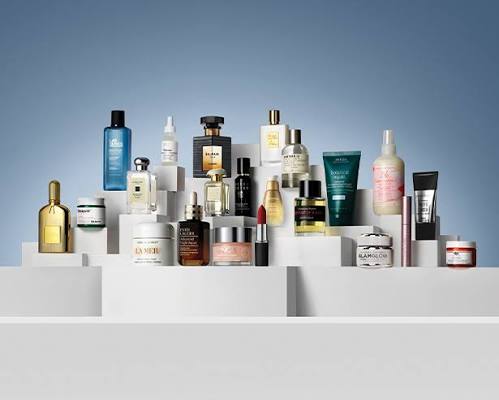
This quarter's rebound at Estée Lauder was led by skincare brands like La Mer and The Ordinary
It's hard to pin down from disclosures alone why two companies facing the identical event landed in such different places. But there's a clue. Estée Lauder's Q4 rebound was led by skincare brands — La Mer, The Ordinary, and the core Estée Lauder brand — and full-year skincare net sales rose 4%. L'Oréal Luxe, by contrast, carries a fragrance-heavy portfolio (Yves Saint Laurent, Armani, and others). Given that Hainan's duty-free market has traditionally skewed toward skincare and color-cosmetics purchases, this gap may reflect the category mix each company brought into Hainan more than any difference in operating execution — though without a category-level breakdown of Hainan sales from either company, this remains an estimate.
Looking at mainland China as a whole, Estée Lauder's net sales came to $3B, up 12% on a reported basis, and organic net sales across Asia Pacific as a whole grew in the mid-single digits. The company said it gained share across fragrance, skincare and makeup alike — this wasn't a Hainan-only story, but a broader improvement across mainland Chinese consumption.
Business Impact — the Cost of the Turnaround, and the Next Quarter's Test
This rebound wasn't free. PRGP is a large-scale restructuring cutting roughly 17.5% of the total workforce, and in June 2026 the company layered on top of it another multi-year Profit Recovery and Growth Plan worth up to $1.75B, running through fiscal 2027. That means a meaningful share of the margin improvement came from cost cuts rather than sales expansion, and it's an open question whether this pace of improvement continues once the layoffs are behind the company. The FY2027 guidance the company laid out (adjusted EPS of $3.10–3.35, net sales growth of 3–5%) came in above the $3.18 consensus, as if to address that concern — but the growth range's low end still sits below this quarter's +5%, so it isn't unqualified optimism either.
Travel-retail risk hasn't fully cleared either. If the "transitional pressure" from Beijing and Shanghai is genuinely temporary, as the company itself framed it, it should likely ease from here — but as L'Oréal's case shows, the same disruption can recover at different speeds depending on brand portfolio. Estée Lauder getting ahead in Hainan this quarter doesn't yet mean China travel retail as a whole has settled onto a stable footing. Looking at this from the industry side, it's safer to withhold judgment rather than jump to conclusions — especially until L'Oréal's next quarterly results are in.
✦RIT's Insights
The most striking thing about this quarter is that two companies facing the identical event — the Beijing/Shanghai concession handover — produced opposite Hainan results. When an industry-wide headline like "travel retail is recovering" or "Chinese consumption is coming back" appears, it's easy to miss how much the picture varies brand by brand underneath it. The Estée Lauder–L'Oréal comparison puts a very clear number on that variance. Anyone working duty-free/travel-retail MD should resist judging the industry as one block in the face of a shock like this, and instead build the habit of tracking each in-store brand's sales trend separately. This case is concrete proof that the same shock can produce completely different recovery speeds depending on category mix.
It's also worth not glossing over the fact that skincare brands like La Mer and The Ordinary led Estée Lauder's rebound. In a channel like Hainan, which skews toward skincare and color cosmetics, brands with deep skincare lineups have an edge over fragrance-centered portfolios — a signal beauty category buyers may want to weigh when setting next season's ordering and promotion priorities.
One more thing worth flagging is what actually fueled this rebound. A 66% jump in adjusted EPS is a flashy number, but a meaningful share of it came from a painful restructuring that cut 17.5% of the total workforce. Profit growth from rising sales and profit growth from headcount reduction land as the same number on the books, but their sustainability is entirely different. Once the layoff effect is fully baked into the base starting next quarter, further margin improvement will have to come purely from sales growth. Finance and IR teams would do well to start tracking organic sales growth and margin expansion as separate lines from here — splitting them apart in advance is the only way to tell, come next quarter, whether a surprise is real or an illusion. That's when this turnaround's real strength gets tested, in RIT's view.
Finally, Korean retail shouldn't lose sight of Dr.Jart+. This Korean brand, owned by Estée Lauder, took a $375M impairment last quarter over "underperformance in Korea and mainland China." The parent company rebounded, but one Korean brand's struggles may well be sitting in the shadow of that rebound. This is exactly the point that concerns RIT looking at this data — the only way to see how Korean brands acquired by global beauty conglomerates are actually doing, behind the parent's good headline numbers, is to keep tracking these brand-level impairment disclosures.
From a competitive-benchmarking standpoint, this case is also worth chewing on. The fact that two companies hit by the identical shock produced such different scorecards is itself proof that "travel retail is recovering" shouldn't be treated as one uniform industry-wide trend. Practically speaking, next quarter — particularly L'Oréal's Q3 results — is the thing to watch. If L'Oréal's Hainan sales catch up and follow Estée Lauder's rebound, this gap was simply a timing difference; if the gap keeps widening instead, that adds weight to the hypothesis that it's a structural difference in brand portfolio itself.