66 Years After Pioneering Downtown Duty Free, DFS Is Winding Down — and LVMH Is Reshaping Its Business
2026-08-21 11:52 AM
Overview
DFS Group, which built the world's first downtown duty-free store, is closing down its business after 66 years. It has fully exited the United States, sold its Hong Kong and Macau stores to China Tourism Group Duty Free (CDFG) for up to $395M, and shut its Hawaii and Guam operations. But LVMH took CDFG shares instead of cash in that deal — a sign it's stepping back from running stores, not stepping out of China's travel-retail market altogether.
In March 2026, DFS Group — 66 years into its history as a duty-free retailer — handed its Los Angeles and San Francisco airport concessions to Duty Free Americas and passed on rebidding for JFK, completing its full exit from the U.S. market. Back in January of the same year, it had agreed to sell its Hong Kong and Macau stores, along with the rights to use the DFS brand in Greater China, to China Tourism Group Duty Free (CDFG) for up to $395M; that deal closed in March. Hawaii shut down after 63 years, Guam after 50. The company that invented the "downtown duty free" format itself is now quietly exiting, one market at a time, the very industry it built.
66 years after inventing the downtown duty-free format in Hong Kong in 1960, DFS is winding down its business around the world
Background — From a Back Alley in Hong Kong to the World's Largest Duty-Free Retailer
DFS began on November 7, 1960, in Hong Kong. Cornell classmates Robert Miller and Chuck Feeney founded the company under the name "Tourists International." The two had already been running a business together selling perfume, tape recorders, duty-free liquor and cars to U.S. servicemen stationed in Europe, and carried that experience over to Hong Kong. The new company quickly won the duty-free concession at Hong Kong's Kai Tak Airport, and in 1962 opened stores at both Hong Kong and Honolulu international airports — the Honolulu store was the first airport duty-free shop in the United States.
What turned DFS into the world's largest duty-free retailer wasn't airports, though — it was an invention: the downtown duty-free store. In the 1970s and '80s, across Pacific destinations like Hawaii, Guam and Saipan, DFS introduced a model where shoppers verified their identity with a passport and airline ticket, shopped in advance at a downtown location, and picked up their purchases at the airport — a format aimed squarely at the era's explosively growing Japanese group-tour traffic. The model was a runaway success, and for a time DFS was the largest duty-free retailer in the world.
Period
Event
1960
Robert Miller and Chuck Feeney found "Tourists International" (later DFS) in Hong Kong; win the Kai Tak Airport duty-free concession
1962
Open stores at Hong Kong and Honolulu international airports — the first airport duty-free store in the U.S.
1970s–80s
Rapid growth in Hawaii, Guam, Saipan and elsewhere via the "downtown duty free" model aimed at Japanese group tourism; becomes the world's largest duty-free retailer at one point
1996–97
LVMH secures a controlling stake in DFS after a roughly $4B acquisition battle; Miller stays on, retaining a 38% stake
2010s
Rebranded around the luxury concept "T Galleria"; expands airport and downtown stores across Hong Kong, Macau, Venice, Auckland and more worldwide
2020–22
COVID-19 forces temporary and permanent store closures worldwide; revenue collapses from a roughly $8.59B scale in 2019
Jan 2025
Closes the Tsim Sha Tsui East store in Hong Kong and the Senado Square store in Macau
Jan 2026
Agrees to sell its Hong Kong/Macau business and Greater China brand rights to CDFG for up to $395M; scraps the Hainan Yalong Bay project
Mar 2026
Deal closes (LVMH and the Miller family take newly issued CDFG shares) · Guam store closes after 50 years · Hawaii's Waikiki store closes
Mar 2026–
LAX and SFO concessions transfer to Duty Free Americas, JFK rebid abandoned, Honolulu and Kahului airport stores transfer to International Shoppes — DFS fully exits the U.S. market
In 1996, after nearly two decades of growth, DFS changed course. Co-founder Feeney decided to sell off most of his stake, LVMH entered a roughly $4B acquisition battle, and by 1997 DFS had become an LVMH subsidiary. Miller stayed on, holding a 38% stake. LVMH then went on to rebrand DFS around the luxury "T Galleria" concept, expanding its store network into Hong Kong, Macau, Venice, Auckland, Guam, Saipan and beyond, while also bidding aggressively for airport duty-free concessions around the world. The 2000s and 2010s, coinciding with an explosive rise in outbound Chinese consumer spending, marked the peak of DFS's dominance.
The Core Insight — This Isn't a COVID Hangover. It's the Business Model Itself Breaking Down
Reading DFS's retreat as simply a slow recovery still lagging behind the COVID-19 shock only gets you halfway to the real story. Industry data shows that by 2024, global traveler numbers had already reached 9.5 billion, surpassing pre-pandemic (2019) levels. Yet total travel-retail sales that same year came to $74.1B — still 13% below 2019. In other words, people are traveling as much as, or more than, before, but spending less at duty-free stores while they do it. This isn't a "temporary gap that will eventually close" — it should be read as a signal that the business model DFS itself built and scaled — verify with a passport, shop downtown, collect at the airport — is under structural strain.
Two forces, both rooted in China, are driving that strain. One is tighter enforcement against daigou (个人 reseller/bulk-buying) networks, which has sharply cut Chinese tourists' bulk purchases of overseas beauty and luxury goods. The other is Beijing's active push to build Hainan into a domestic duty-free special zone, which is absorbing Chinese luxury spending into the domestic market (Hainan) rather than letting it flow abroad. Hong Kong and Macau — DFS's historic cash cows — sit at the exact intersection of both trends. Macau, additionally, leans heavily on casino foot traffic, which has made its own recovery slower than other regions. The numbers bear this out starkly: net profit at the DFS Hong Kong and Macau stores targeted in this sale collapsed 87% in a single year, from RMB 965M in 2023 to RMB 127.6M in 2024 — a breakdown the numbers had already confirmed before LVMH ever decided to sell.
The real insight easy to miss here is that LVMH didn't close this out as a straight all-cash sale. LVMH and the Miller family agreed to take part of the proceeds not in cash but in newly issued CDFG H-shares. In other words, LVMH gave up its position as an operator directly running stores in Hong Kong and Macau, but kept its financial exposure to the growth of China's travel-retail market fully intact. At the same time, the two sides signed a strategic cooperation MOU under which LVMH brands — Dior, Louis Vuitton, Hennessy, Bulgari and others — will get more, and better-placed, shelf space inside CDFG's stores. Unpacked, the logic reads: "Directly operating duty-free stores in Hong Kong and Macau is no longer an attractive business, but the market itself is still large. So hand the real-estate and headcount risk of running stores over to CDFG, and let us capture margin instead as a brand stocked inside those stores." LVMH Chairman Bernard Arnault's comment that DFS is "less interesting [than Sephora within the same division]... we've sold most of it, and we'll continue to exit — slowly, but surely" fits the same logic. This isn't pessimism about the travel-retail market itself; it's pessimism about remaining a store operator within it.
Business Impact — the DFS Brand Survives; the DFS Company Does Not
The DFS name won't disappear entirely. In Hong Kong and Macau, CDFG now holds the rights to keep running stores under the DFS brand, with LVMH staying involved both as an equity holder and as a stocked brand. But this marks a shift for DFS — from an independent operator opening and closing its own stores worldwide under its own name, to one licensed brand inside a much larger platform run by China Tourism Group. Co-founder Robert Miller's net worth, which fell from roughly $5.5B in 2020 to about $2B by 2025 on Forbes's count, is probably the most intuitive gauge of just how much value has been stripped out of the company that bears his imprint.
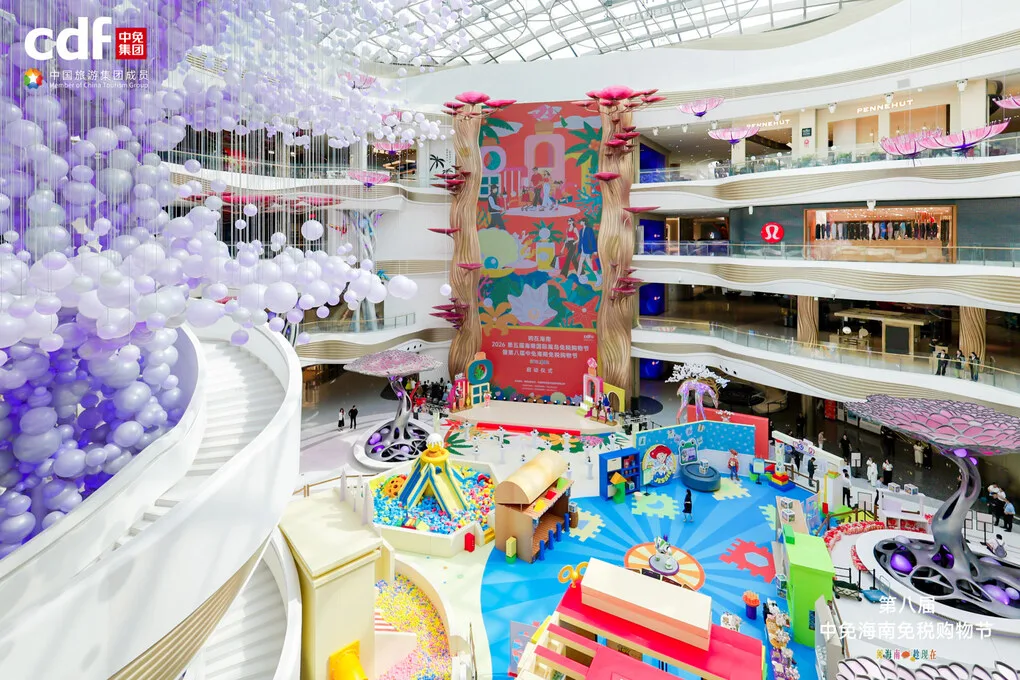
The upside from this retreat is landing with other operators. Duty Free Americas has stepped into the Los Angeles and San Francisco airport concessions, and International Shoppes has taken over Honolulu and Kahului. Each concession DFS lays down turns almost immediately into another operator's expansion opportunity — evidence that the global travel-retail market isn't shrinking so much as being redrawn. And the winner of that redraw is unambiguous: CDFG, already the world's largest duty-free operator, has now absorbed the symbolically significant Hong Kong and Macau markets as well, cementing its position further still. Reading DFS's exit as merely one company's failure story, then, only gets you half the picture — the company that invented the downtown duty-free format and built it into the world's largest duty-free retailer was also the first to buckle once the spending habits of outbound Chinese consumers, its core customer for that very format, changed. What's worth watching next isn't DFS itself, but how other travel-retail operators that grew up in a similar era on a similar model answer the same question now in front of them.
✦RIT's Insights
The detail most worth sitting with in this case is LVMH's decision to take "CDFG shares" rather than "cash." This wasn't simply cleaning up a loss-making business — it amounts to an acknowledgment that the future winner of China's travel-retail market won't be LVMH itself but China Tourism Group, and a decision to buy a stake in that winner on the way out. In RIT's view, this pattern of exit — giving up operations while holding onto equity — is likely to repeat as other Western brands and retailers wind down China-linked businesses going forward. Anyone shaping luxury-brand distribution strategy should pay close attention to this choice, because LVMH has already run, in the real world, the exact trade-off between defending owned stores and remaining purely as a stocked brand inside a third-party platform.
The second thing worth flagging is that net profit at DFS's Hong Kong and Macau stores collapsed 87% in a single year. A breakdown at that speed isn't explained by ordinary cyclical softness. With daigou enforcement and Hainan's special-zone build-out both working at once, the very reason Hong Kong and Macau existed as markets — as a gateway for outbound Chinese shopping — is being fundamentally undermined. This isn't a story domestic duty-free industry people can set aside as someone else's problem — it's a signal that the old luxury model built on casino traffic and daigou dependence is running dry, and if major Korean operators like Lotte and Shilla are still running businesses built for the era of heavy dependence on Chinese group tourism, they face exactly the same question. Anyone still holding the assumption that "things go back to normal once Chinese group tours pick up again" should treat DFS's collapse as reason enough to re-examine that assumption. The fact that an asset whose net profit fell 87% in a single year still changed hands for up to $395M is also worth keeping, for M&A and investment teams, as a real benchmark showing how far travel-retail asset valuations have already been reset from pre-COVID levels.
Finally, what stands out most about a 66-year-old company disappearing is the speed of it. As recently as early 2025, the wind-down looked like closures of a handful of stores in Hong Kong and Macau. Eighteen months later, it had become a full U.S. exit and the sale of the Hong Kong/Macau business. Structural decline in travel retail should now be understood not as something that "adjusts slowly" but as something that, once its direction is set, finishes very quickly. Airport concession/leasing teams should look at this speed from another angle too — just as operators like Duty Free Americas and International Shoppes immediately absorbed the concessions DFS gave up, a legacy operator's exit turns immediately into an opening for new entrants. That means always leaving room, in domestic and overseas airport rebids alike, for aggressive bids from new or mid-tier operators. What keeps nagging at RIT here is that Korean retail, too, shouldn't treat this pace as someone else's problem, and should get ahead of assessing its own business models' durability now.