Department Store E-Commerce's New Weapon Is Curation, Not Price
2026-07-09 8:14 PMGeneral
Overview
Hyundai Department Store's premium curation platform "The Hyundai Hi," launched April 6, added 840,000 new members and grew transaction value 43% in its first nine weeks. Built around merchandising curation rather than discounts and promotions, the strategy is now being echoed, each in its own way, by Shinsegae and Lotte. Korea's three department store chains are redesigning e-commerce around taste, not price.
While Coupang and Musinsa reshaped Korean online retail with rocket delivery and curated commerce, respectively, the country's three major department store chains kept losing that fight. Offline, they remain dominant. Online, their own e-commerce platforms have mostly stayed an afterthought. That's starting to change. Hyundai Department Store's "The Hyundai Hi," launched April 6, hit 840,000 new members in its first nine weeks, and Shinsegae and Lotte are now rolling out their own online curation strategies, each in its own way. All three companies have converged on the same weapon: don't fight Coupang on price.
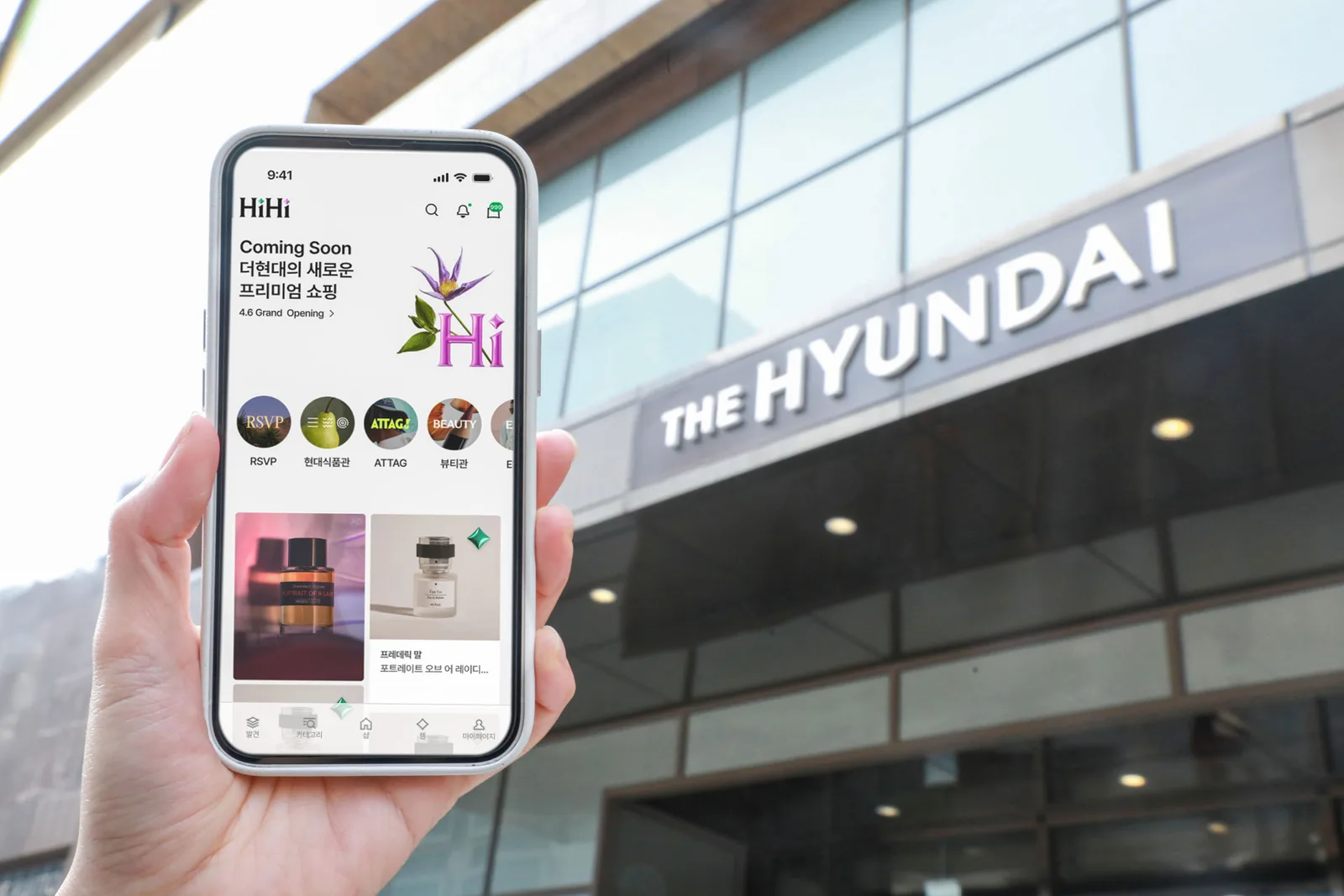
The Hyundai Hi, 4.6 Grand Opening
Offline Was Thriving. Online Stayed Quiet.
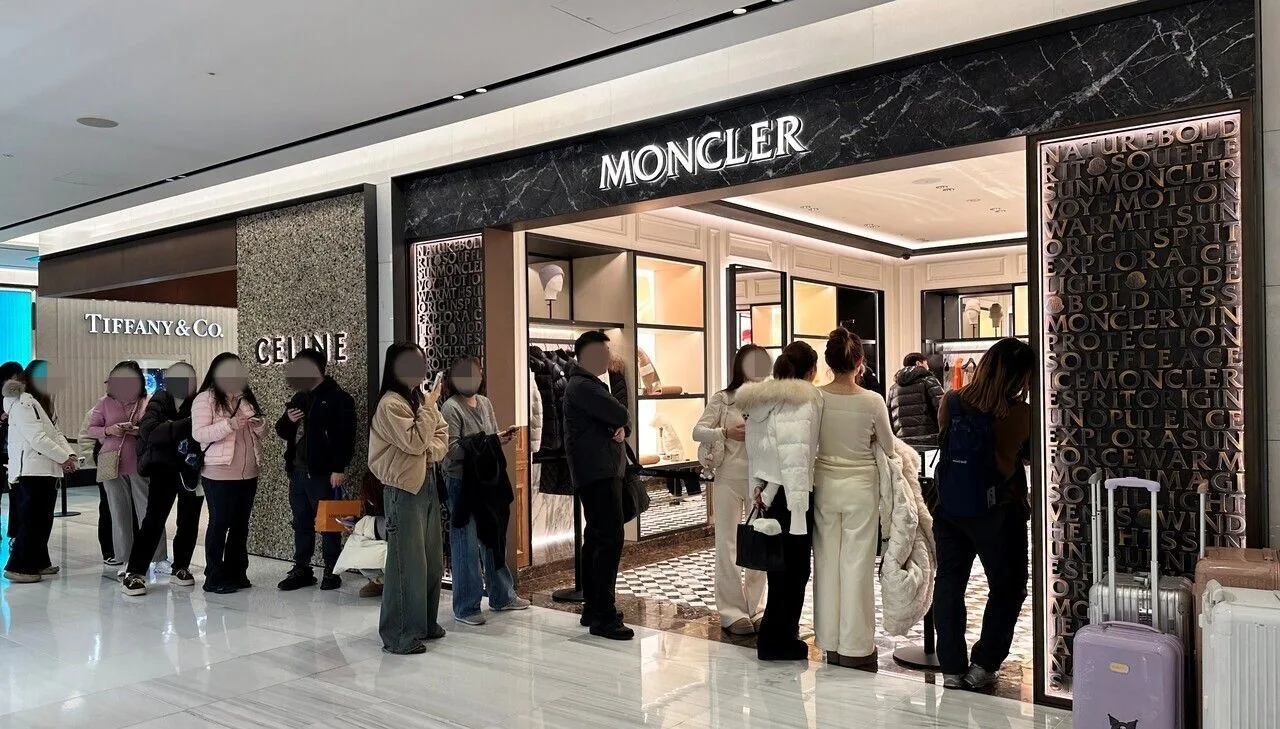
It's worth starting with the backdrop that produced this counterattack. A weaker won combined with bonus payouts from the semiconductor industry has driven Korea's three department store chains to seven straight months of double-digit revenue growth. Foreign tourists, flush with favorable exchange rates, poured into luxury floors, and brands like Bulgari and Tiffany posted record sales inside Korean department stores. But the beneficiary of this boom stayed strictly offline — e-commerce platforms barely felt the tailwind over the same period. Hypermarkets, meanwhile, have had a harder time of it, losing customers on two fronts at once, to online retail and to ultra-low-price channels like Daiso.
That leaves department stores in this position: dominant offline in luxury and premium categories, but with that strength rarely translating online. Their own e-commerce platforms had repeatedly tried to clumsily mimic the open-marketplace playbook of Coupang and 11st — lowest price, promotions, volume competition — and repeatedly faded into irrelevance doing it. The department stores' real edge — merchandise hand-picked by expert buyers, brand relationships, and the in-store experience — simply never got properly built out online.
What The Hyundai Hi Flipped
Hyundai's online counterpart to The Hyundai Seoul, "The Hyundai Hi," inverts that failed formula outright. Its homepage leads with lifestyle curation content instead of discounts, promotions, and ads. Unlike an open marketplace that will list virtually any brand, it carries only around 3,000 brands, each vetted directly by Hyundai Department Store's own buyers. Rather than a search-driven structure, it's built around "discovering" and "selecting" items a merchandiser has already curated by theme.
Layered on top is an AI shopping assistant, "HEYDI," which recommends items within a stated budget, and cross-channel personalization that spans online and offline purchase history — a customer who bought flowers in-store might get recommended a fragrance or a vase, while a customer who bought wine glasses online gets a matching product recommendation. The app UX itself was designed with a gamified element — collecting "gems" — to make the experience feel like discovery rather than plain shopping, alongside original content investments such as a tvN variety-show tie-in and Nordic lifestyle editorials.
The results showed up in the numbers. Transaction value surpassed KRW 54.0 billion in roughly nine weeks — up 43.5% versus the prior online store — while new sign-ups jumped about 560% year over year. Cumulative visitors reached 9.6 million, with average daily visitors up 446% from a year earlier. Of new sign-ups, roughly 30% converted to an actual purchase. Add in a platform integration with Cafe24 and a partnership with Kakao Talk channels, and the intent reads as more than simply launching a new app — it looks like an attempt to grow this into a platform that pulls in small and mid-sized brands and creators as well.
Shinsegae and Lotte Are Moving Too, Each in Their Own Way
What's worth noting is that this isn't a solo experiment by Hyundai. Shinsegae Department Store launched its VIP-focused online platform "Beyond Shinsegae" last August, and a promotion that counted online purchases 100% toward department-store VIP status lifted sales more than 80% month over month during the promotional period. It is also differentiating through limited-edition, exclusive content aimed at VIP shoppers via its high-end curation platform "The Showcase" — including a Korea-exclusive edition developed in partnership with Lamborghini Seoul.
Lotte Department Store restructured its existing membership points program into "Avenuel Curation," letting VIP customers redeem tier points across roughly 100 partner venues in six categories — luxury hotels, fine dining, leisure, and more. Separately from its e-commerce subsidiary Lotte On, it has strengthened app-centric online-offline integration with an AI chatbot, "Dustin," and a virtual fitting service, "SelFit." Lotte Department Store was, in fact, also ranked No. 1 among department stores in the 2026 National Customer Satisfaction Index, announced earlier this month.
The three companies' specific tactics differ — Hyundai with a curation-content platform, Shinsegae with unified VIP online performance, Lotte with experiential membership — but the direction is exactly the same. None of them are stepping onto the price-and-speed ring built by Coupang and Musinsa. Instead, they are moving what department stores were already good at — curation, brand trust, VIP relationships — online, unchanged.
Why This Matters Now
This shift matters beyond being just another new-service launch, for two reasons.
First, Korean e-commerce has long been defined by Coupang's Rocket Delivery (speed) and open-marketplace lowest-price competition. Department stores opting out of that axis and entering the online market on an entirely different one — curation, personalization, experience — signals that a third competitive axis, beyond price and speed, could take genuine hold in Korean e-commerce. That also means a new competitor has shown up for platforms like Musinsa that have grown on curation as their own weapon — though while Musinsa targets price-sensitive younger consumers, department-store curation platforms are aiming squarely at higher-spending customers across a broader range of lifestyle categories.
Second, if this experiment succeeds, department stores will have a structure that lets them extend the merchandising expertise, brand relationships, and VIP data built up offline directly into online channels. If it fails, it becomes a case study showing that curation as a strength is difficult to replicate online without the physical context of the store. In other words, this is the test of whether "transplanting a department store's online DNA" is actually possible. In practical terms, the result of this test is likely to become clear faster than expected. Curation isn't something a single piece of content can conjure overnight — it requires a merchandising organization's accumulated eye for product — so a company that's weak on this front tends to show it within a year or two.
What makes The Hyundai Hi's early results meaningful isn't the numbers themselves, but the hypothesis those numbers prove: department stores can win online without playing by Coupang's rules. The fact that Shinsegae and Lotte have each placed the same bet, in their own ways, is a signal that this isn't one company's experiment — it's a pivot happening across the entire industry.
✦RIT's Insights
This isn't the first time department stores have launched an online store. Over the past decade or so, each chain has relaunched its own e-commerce platform several times, but most of them clumsily imitated Coupang's and 11st's playbook and faded into irrelevance without ever building real presence. What's different this time is clear — for the first time, they've started fighting with what they're actually good at.
Even so, no one should get carried away by the initial 840,000 sign-ups. The real test is repeat-purchase rate and average order value. Thirty percent of new customers converting to a purchase is a good signal, but whether they're still there in six months or a year is a completely different question. Curation isn't a relationship that ends with a single discovery — it only survives if taste keeps getting matched continuously.
The reason this early performance was possible is clear: promotional budget went not into traffic acquisition but into curation content and merchandising capability. E-commerce leads need to accept this paradox first — that the absence of discounts is precisely what draws in new customers — before they can design the next stage. For merchandisers and buyers, the key is translating the judgment built up offline directly into the online assortment. As with Hyundai's roughly 3,000-brand selection, a curation capability oriented toward "precision" rather than "volume" ultimately becomes the online channel's competitive edge. What RIT is watching closely is the calculus on the vendor side. Unlike an open marketplace, getting listed on a curation platform like this is itself a barrier to entry, and the brands adopted early effectively become the "face" of the curation. Brand and vendor managers should treat their relationship with department-store buyers as a gateway to this new channel expansion and start investing in it now.
For VIP and membership managers, Shinsegae's unified online-VIP performance counting and Lotte's experiential membership are both useful reference cases. Both companies have shown that merging online and offline VIP tiers into one system is the key lever for channel conversion — and doing so requires investment in a system that manages online and offline purchase history together to be finished first. RIT would argue that strategy teams at competitors like Coupang, Musinsa, and Naver actually need to watch this trend with more tension than anyone. Department stores' online push is a fight over category and customer segment, not price. To avoid losing higher-spending customers in premium and lifestyle categories to department stores, competitors need to strengthen their own curation and personalization capabilities first, rather than compete purely on lowest price.
It's encouraging that all three of Korea's major department store chains have placed this bet at the same time. But the fact that they're carrying three different weapons — curation content, unified VIP status, experiential membership — also means the industry itself doesn't yet have conviction about which answer is right. Which of these models survives in a year or two will set the standard for premium e-commerce in Korea.