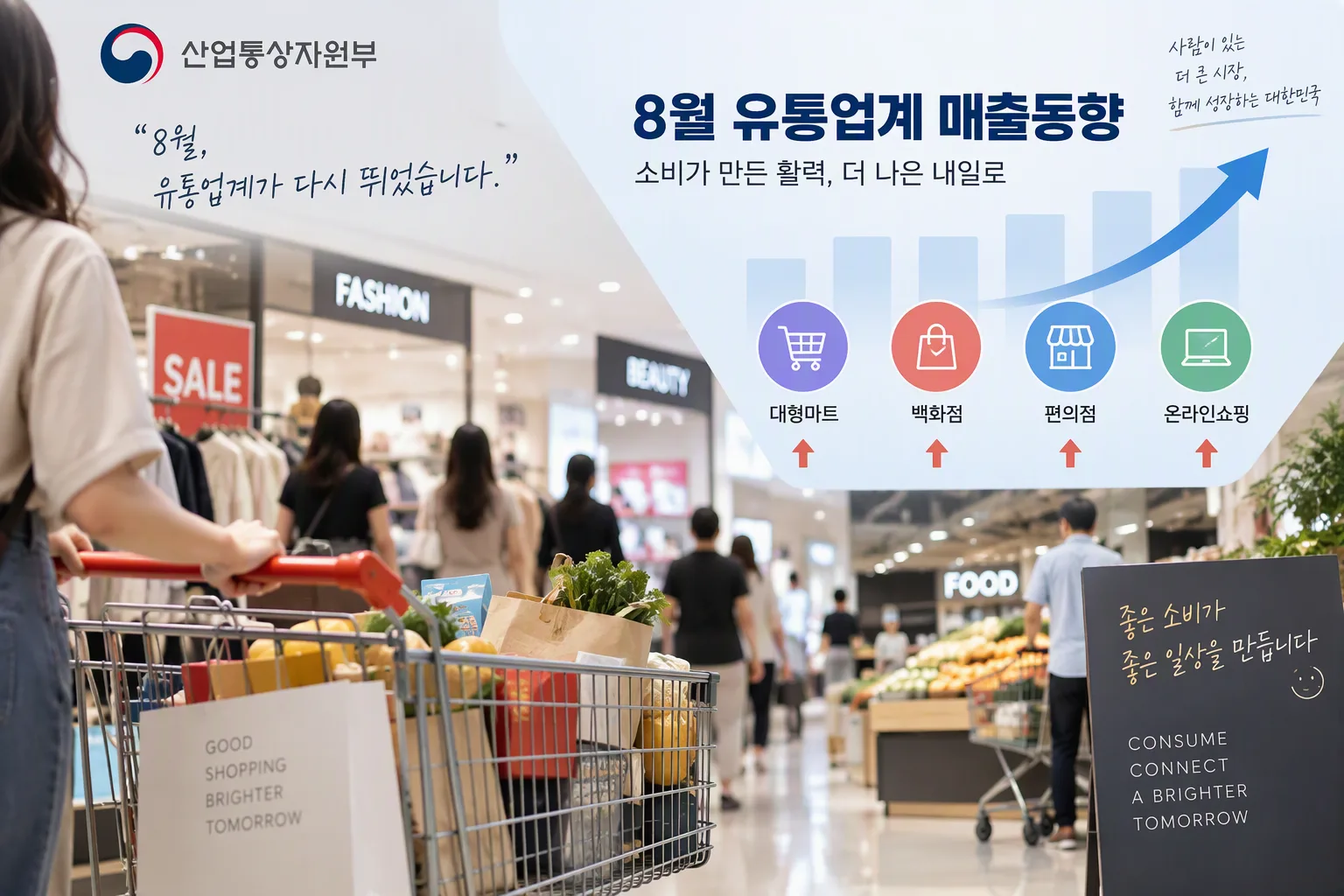
Outside the Moncler and Tiffany boutiques at Lotte Department Store's Myeongdong flagship, a line of foreign tourists trailing rolling suitcases has become an unremarkable sight. Add up first-half 2026 foreign-customer sales across Lotte, Shinsegae and Hyundai department stores and the total comes to roughly KRW 1.72 trillion — all three chains are now on pace to cross KRW 1 trillion in annual foreign sales for the first time ever. Industry watchers say the three combined are all but certain to clear KRW 3 trillion by year-end.
Duty-free stores, over the same period, grew far more slowly — and inside duty free itself, the picture for foreign and domestic customers is entirely different.
| Category | H1 2026 | YoY | Share |
|---|
| Duty-free total sales | 64,752 | +1.8% | 100% |
| — Foreign-customer sales | 49,968 | Single-digit growth | ~77% |
| — Domestic-customer sales | 14,783 | -12% | ~23% |
Figures in KRW 100 million (억원) unless noted otherwise.
According to Korea Duty Free Shops Association figures, H1 2026 duty-free total sales came to KRW 6.4752 trillion, up just 1.8% year over year — and actually 12.5% below H1 2024. Split that total between foreign and domestic customers and the character of the numbers diverges sharply. Foreign-customer sales (KRW 4.9968 trillion) rose, if modestly, but only in the single digits — nowhere close to the triple-digit growth rates at the three department store chains. Domestic-customer sales (KRW 1.4783 trillion) fell outright, down 12%, as high exchange rates eroded the price appeal of duty-free goods and kept domestic shoppers away. In other words, today's flat-looking total (+1.8%) is the net of two offsetting forces — foreign sales rising modestly, domestic sales falling sharply — not a market recovering evenly across the board.
Inbound foreign arrivals, over the same period, totaled 10,709,900, up 21.3% year over year — so it isn't that tourists declined. Tourists grew 21.3%, yet duty-free foreign sales grew only in the single digits, which means a disproportionate share of that tourist spending tilted toward department stores instead of duty free. Behind that gap is something more structural than "K-culture is popular": a price reversal created by the exchange rate.
Three Chains, Three Different Faces of the Foreign-Customer Boom
Start with the numbers. All three chains had foreign-customer sales driving their overall H1 growth.
| Department store | H1 foreign sales | YoY | vs. last year's full-year total | Full-year outlook |
|---|
| Lotte | 6,400 | +125% | 87% | Expected to cross KRW 1 trillion in Q3 |
| Shinsegae | 5,800 | +120% | 90% | Likely to hit KRW 1 trillion this year |
| Hyundai | ~5,000 | — | 70%+ | Expected to cross KRW 1 trillion for the first time this year |
Figures in KRW 100 million (억원) unless noted otherwise.
All three point the same direction, but the texture of growth differs store by store.
Lotte was carried by its Myeongdong flagship. The store's H1 foreign sales rose 140% year over year, pushing foreign customers to roughly 30% of total sales — the highest of any store across the three chains. Its Busan Centum City store, boosted by rising cruise-ship tourism, saw foreign sales jump 230%. By category, luxury goods rose 130% and fashion 135%, with spending concentrated in higher-priced categories.
Shinsegae shows the clearest nationality diversification. The China customer share of total foreign sales, which stood at 77.5% in 2019, fell to 48.5% in H1 2026, while the US share rose from 1.1% to 19.1% and Southeast Asia and other Asian markets rose from 4.4% to 14.9%. Its Gangnam store drew customers from more than 120 countries, building a portfolio much less dependent on any single nationality.
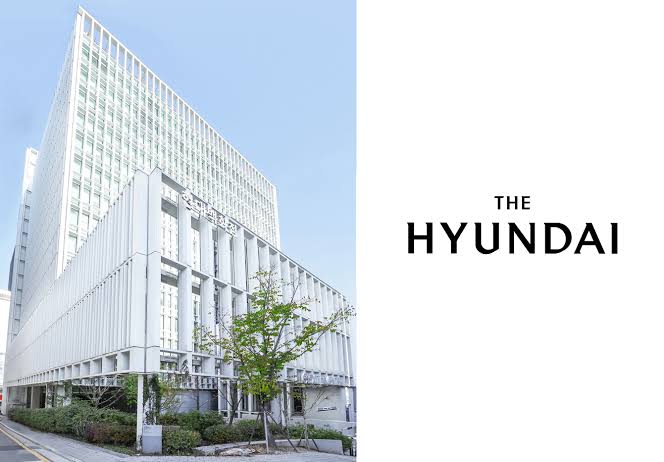
Hyundai started from the lowest base, so its rate of increase is the steepest. As of last year, foreign customers made up only about 7% of total sales — a share that had been climbing steadily from roughly 1% in 2022. This year, The Hyundai Seoul (foreign sales +134%) and the Trade Center store (+131%) both saw their foreign-customer share jump to around 20% in H1. The company says its customer base has broadened beyond its early core of Chinese, Japanese and American tourists to include the UAE, Kazakhstan and other markets, turning the chain into a shopping destination visited by customers from roughly 180 countries.
The Core Insight — Why Department Stores Instead of Duty Free
Chalking up the gap in growth rates between duty free and department stores — even as the same tourist wave grew — to something vague like "K-culture's popularity" tells only half the story. The real key lies in how the two channels set prices.
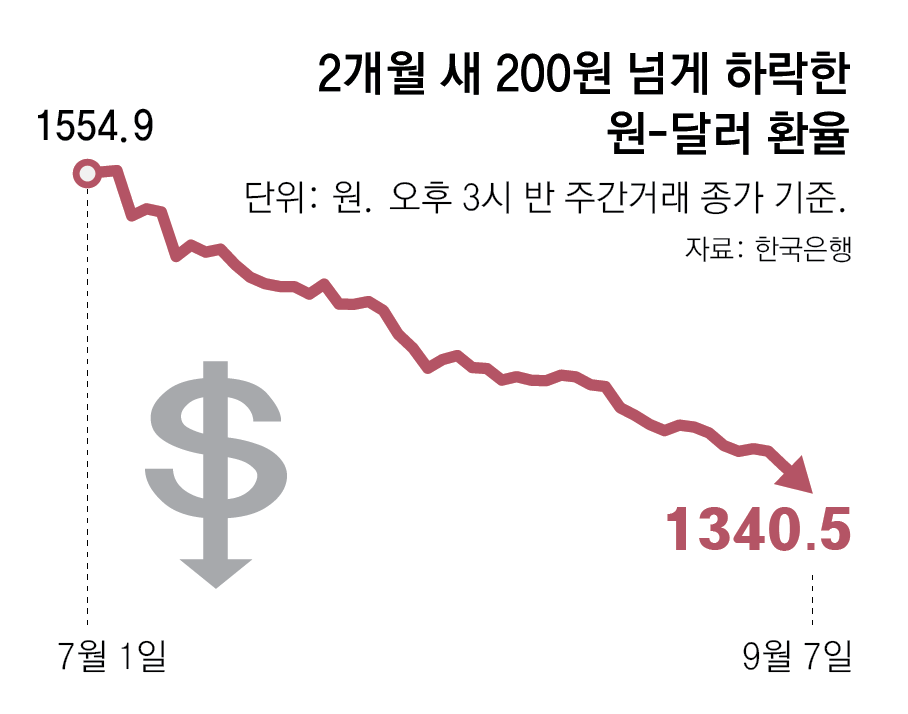
Duty-free stores adjust prices to reflect the won-dollar exchange rate in something close to real time. Department stores, by contrast, carry foreign brands at won prices set by headquarters and held fixed for a period (typically by season). When the won weakens, that lag produces opposite outcomes: duty-free prices immediately absorb the exchange-rate move, shrinking the perceived benefit for foreign shoppers, while a department store's "fixed won price" ends up looking cheaper the weaker the won gets, once converted back to dollars, yen or yuan. That's the mechanism behind the word-of-mouth spreading on social media that "department stores are now cheaper than duty free." The same mechanism runs in reverse for domestic shoppers, who earn in won — to them, duty-free prices look like they've simply gone up. Duty-free's -12% decline in domestic sales is the other face of this same price reversal.
This isn't a one-season coincidence — it's a mechanism that can keep recurring structurally for as long as the won stays weak, and that's exactly why the industry should be paying attention. In 2016, by the industry's own account, duty-free stores were the ones posting explosive growth; in H1 2026, that same explosive growth has shifted its center of gravity to department stores. Which channel has the edge isn't fixed — it can move with the exchange-rate cycle.
Business Impact — Is This Boom Sustainable?
Foreign-customer sales clearly lifted results at all three chains, but industry opinion is split on how sustainable the boom is. There's concern about polarization, too, as spending concentrates in luxury and high-priced fashion categories. At Lotte, for instance, luxury (+130%) and fashion (+135%) growth stood out — and the more a chain leans on these high-price categories, the bigger the hit could be if the won turns and strengthens again.
There's also a view that this can't remain a department-store-only opportunity for long, as online penetration keeps rising and e-commerce players expand into delivery, cosmetics and luxury goods. High prices, high interest rates and household debt mean domestic consumption itself remains weak — a reminder that this growth is being driven purely by foreign demand, not by any recovery in Korean consumer spending.
✦RIT's Insights
The most striking detail here is Shinsegae Gangnam's "120 countries." That's a signal that customer nationality itself is diversifying, not concentrating around any one country — and it can also be read as evidence that Seoul is gaining real brand power as a shopping destination, beyond a short-term currency windfall. Whether that diversification actually converts into repeat visits, though, or whether it's a one-time influx drawn in while the exchange rate happens to be favorable, is something that can only be judged after a few more quarters. Department store MDs and store operators need to split their response by store. At a store with a diversified nationality mix, like Shinsegae Gangnam, investment should prioritize general-purpose infrastructure — multilingual service, diverse payment options, tax-refund systems — over promotions targeting any single country. At a store still concentrated in specific channels, like the Myeongdong flagship's reliance on Chinese and cruise-ship traffic, a contingency plan should be designed in advance for when that channel wobbles.
Worth watching even more closely is that this isn't the first time the center of gravity has shifted between duty free and department stores. The industry's own read — that duty free saw explosive growth in 2016, and department stores are seeing it now — shows these two channels have effectively been competing for one shared "foreign shopping pie," trading places as the exchange rate moves. Reading department stores' current growth as some newly secured structural advantage would be premature. The moment the won turns and strengthens again, this flow could quietly shift back toward duty free. This is exactly the point that concerns RIT when looking at this data — since the structural difference between fixed won pricing and real-time exchange-rate pass-through is what decides price competitiveness between channels at any given moment, pricing and merchandising teams may want to consider shortening their price-review cycles during periods of high currency volatility. Finance and strategy teams should start simulating earnings sensitivity under a won-strengthening scenario now. The very fact that the center of growth shifted between channels from 2016 to 2026 is itself the warning.
There's one more thing worth flagging on the other side of this shift — the duty-free side. The gap between inbound arrival growth (+21.3%) and duty-free foreign-sales growth (single digits) is a signal that the correlation between the two isn't as strong as it used to be. Duty-free business teams shouldn't read inbound numbers alone as an optimistic signal for revenue — they need to separately track where tourists are actually choosing to shop. The -12% domestic sales figure shouldn't be dismissed lightly either; it means a separate pricing and loyalty strategy is needed to hold onto domestic customers during a high-exchange-rate period.
Finally, the fact that foreign customers now account for roughly 30% of sales at Lotte's Myeongdong flagship is worth celebrating and worth risk-managing at the same time. A third of that store's revenue now depends on external variables — exchange rates and tourism flows — that the company itself doesn't control. In RIT's view, the real homework for Korea's department store industry in its next phase isn't "how do we pull in more foreign customers" — it's how to build a structure that holds up even when this share swings.
Sources
- Lotte Department Store's H1 foreign-customer sales hit KRW 640bn — nearing an annual KRW 1tn era (Hankyung, 2026-07-13, store-by-store foreign sales growth)
- Shinsegae Department Store's H1 foreign-customer sales hit a "record" KRW 580bn — full-year KRW 1tn in sight (Asia Today, 2026-07-13, Shinsegae's shift in nationality mix)
- K-shopping wins over foreign shoppers — the three department store operators post record foreign sales (comprehensive) (Asia Economy Daily, 2026-07-13, three-way comparison including Hyundai Department Store's figures)
- 1.071 million foreign visitors in H1 — Europe up 20%, the Americas up 13% (Asia Economy Daily, 2026-08-06, H1 inbound-visitor statistics)
- Foreign shoppers save Korea's duty-free industry — $5bn spent by 6.64 million visitors in H1 (Money Today, 2026-07-30, Korea Duty Free Shops Association's H1 2026 sales data)