The Qatar-Dubai Race to Own Middle East Travel Retail
2026-07-04 7:55 AMMiddle East & Africa
Overview
As growth in Hainan's duty-free market slows, the Middle East is emerging as the new battleground for global travel retail. Qatar Duty Free at Hamad International Airport and Dubai Duty Free at DXB are colliding head-on over transit traffic and luxury beauty and liquor sales. How these two hubs compete, and how they expand, offers a direct reference point for Asian and European operators eyeing entry into the Middle East.
The travel retail industry's attention is shifting from Hainan to the Middle East. As Hainan's offshore duty-free market cools under tighter Chinese regulation and shifting consumption patterns, Qatar's Hamad International Airport in Doha and the UAE's DXB in Dubai are aggressively building scale in the fight for global transit-hub status. Both airports process tens of millions of transit passengers a year, and both share a structural trait: most of their duty-free revenue comes not from resident populations but from travelers passing through. The implication for travel retail operators is clear — the Middle East is no longer optional. It is now essential territory.
Hamad International Airport — Qatar Duty Free's Aggressive Expansion
Hamad International Airport, Qatar Airways' hub, is core infrastructure in a national strategy to turn Doha into a transit gateway linking Europe, Asia, and Africa. Qatar Duty Free has kept expanding its retail footprint in step with that strategy, concentrating store resources especially in fragrance, cosmetics, and premium liquor.
What sets Qatar Duty Free apart is its "the airport is the destination" concept. Its large-format duty-free stores are designed not as plain shopping venues but as mixed-use spaces combining indoor gardens, premium lounges, and F&B, converting transit wait time itself into spending time. Given Qatar Airways' high share of long-haul transit passengers, this strategy — aimed at travelers with long dwell times — works in its favor on conversion.
Dubai DXB — Dubai Duty Free's Defense and Reinvestment
Dubai DXB has long been home to Dubai Duty Free, the world's largest single-airport duty-free operator. In response to Hamad's rise, Dubai Duty Free is moving to reaffirm its premium positioning by strengthening its luxury watch and jewelry categories and its limited-edition liquor lineup.
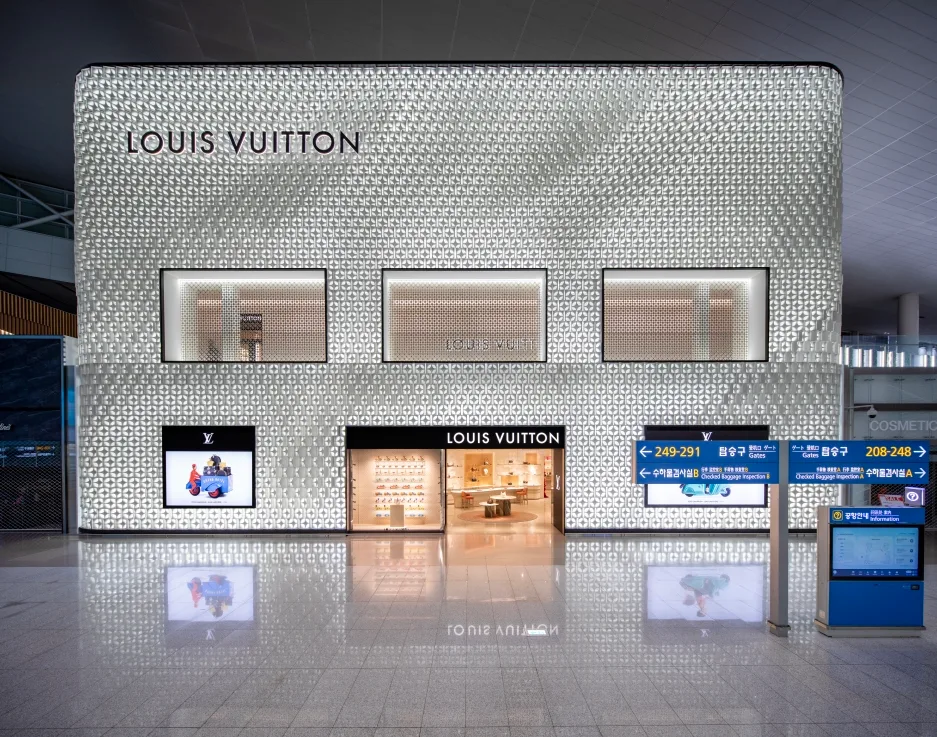
A luxury boutique in an airport transit zone
Dubai's edge isn't simple price competitiveness — it's brand density. Global luxury houses tend to concentrate their airport-exclusive stores and regionally exclusive collections in Dubai, and the resulting scarcity — "you can only buy this in Dubai" — pulls consumers in. It is a different defensive line from the price-led models of Hainan and Qatar.
Why the Middle East Is the New Travel Retail Battleground
Travel retail revenue is fundamentally a function of "transit dwell time times conversion rate." The three major Middle Eastern hubs (Doha, Dubai, Abu Dhabi) sit at the geographic crossroads of European, Asian, African, and Oceanian routes, giving them a structurally higher share of long-haul transit passengers than major European or Asian airports.
Add to that the fact that Middle Eastern governments have made aviation-hub strategy central to national growth strategy, and the scale of investment flowing into airport infrastructure and duty-free concessions becomes difficult to compare with any other region. As a result, Middle Eastern hubs are rapidly catching up to top European and Asian airports in retail floor space, brand-acquisition power, and service standards. With Hainan facing regulatory risk and major European airports facing growth stagnation, the Middle East is now regarded by operators as one of the few remaining high-growth markets.
The Fight Over Luxury Beauty and Liquor
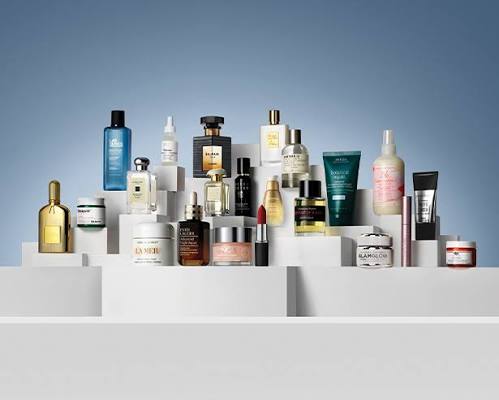
In beauty, global prestige brands have begun treating Middle Eastern airport stores as a third major display hub, after Asia and Europe. Fragrance in particular resonates strongly with Middle Eastern consumers, fueling fierce competition between the two airports to secure regionally exclusive and limited-edition fragrance lineups.
In liquor, limited editions of premium whisky and cognac tailored for the Middle East are becoming more common. Given local cultural norms, however, sales remain strictly confined to transiting and departing passengers, so operators need to keep in mind that store operations run under a different regulatory environment than in Europe or Asia.
A Three-Way Contest With Hainan and Europe
Taken together, the global travel retail map is being reshaped into a three-way contest: Hainan (price competitiveness), major European airports (brand diversity and mature infrastructure), and Middle Eastern hubs (transit dwell time and national-scale investment capacity). As Hainan stalls under policy risk, the Middle East is quickly absorbing the vacuum, while European airports defend their ground with existing brand relationships and infrastructure maturity. In practical terms, of the three, Hainan is the one whose footing looks shakiest — policy risk is a variable operators can't control, while the Middle East and Europe each hold weapons they can control themselves: investment and brand relationships, respectively.
The Middle East is no longer a periphery of the travel retail industry. As national-scale airport infrastructure investment converges with the structural advantage of long-haul transit traffic, Doha and Dubai are rapidly building presence between Hainan and Europe's airports. Whoever wins this contest, the center of gravity for store expansion, concession bidding, and brand acquisition in travel retail over the next five years is likely to be the Middle East.
✦RIT's Insights
The core of Middle East travel retail competition isn't price — it's "the design capability to convert dwell time into spend." Qatar Duty Free is betting on turning the airport itself into a destination; Dubai Duty Free is betting on brand density and scarcity, each pursuing a different route to the same win.
For duty-free operators, now is the moment to decide. What matters isn't picking one of the two hubs — it's seizing the chance to get into the concession while state-led infrastructure investment is in full swing. Looking at this market, RIT's read is that the operators sitting on the sidelines right now are the ones most likely to regret it in five years. The later the initial entry, the more an operator has to start from scratch competing over brand relationships against players who are already established.
Global beauty and liquor brands also shouldn't simply transplant the product planning they use in Asia and Europe. Given that Qatari and Emirati consumers show a particularly strong preference for fragrance and premium whisky, Middle East-specific regional limited editions are better designed on a track separate from Asia and Europe. The same goes for marketing organizations: conversion improves when long-haul transit passengers connecting through Qatar and Dubai are carved out as a distinct segment with their own pre-trip promotions. Sending the same message to guests with long dwell times and short ones won't win the fight.
From an operator's perspective, the riskiest position is a team still clinging to a Hainan-style price-competition playbook alone. A price-led strategy centered on Hainan struggles to capture the new demand emerging from the Middle East, because this is a market that requires learning an entirely new design discipline — converting dwell time into spend. As long as Hainan's policy risk persists, the reallocation of capital and brands toward the Middle East is likely to keep accelerating for the time being.