In February 2001, a high school student opened a community on the Korean portal Freechal called "The Place With So Many Shoe Photos." There was no selling, no revenue — just a pure board for sharing a passion for sneakers. Twenty-five years later, the company that grew out of that board posts annual revenue of KRW 1.4679 trillion and operating profit of KRW 140.5 billion, and is preparing to go public at a target valuation of around KRW 10 trillion. But peel back one layer on its recent results, and operating profit hit a record even as net profit fell more than 41% — and there's still a wide gap between the valuation the company wants and the one the market assigns it. From the founding story to this month's beauty festival in Seongsu-dong, here's Musinsa retraced in numbers.
Founding and History — From a Shoe-Photo Board to a Unicorn
Musinsa's beginnings were a world away from its current scale. In 2003, when Freechal introduced a paid-membership policy for its communities, founder Cho Man-ho launched an independent site, "Musinsa.com," to protect a space where users could keep gathering. As members voluntarily piled up outfit photos, brand reviews, and fashion information, the community gradually evolved into a cultural platform, and in 2009 it moved through a web-magazine phase into e-commerce.
| Timing | Event |
|---|
| 2001 | Cho Man-ho opens "The Place With So Many Shoe Photos" on Freechal |
| 2003 | Breaks away as independent site "Musinsa.com" after Freechal's paid-membership shift |
| 2009 | Moves through a web magazine into e-commerce |
| 2011 | Passes 100 partner brands; third relaunch of Musinsa.com (390,000 members) |
| 2012 | Musinsa Co., Ltd. incorporated (June 25) |
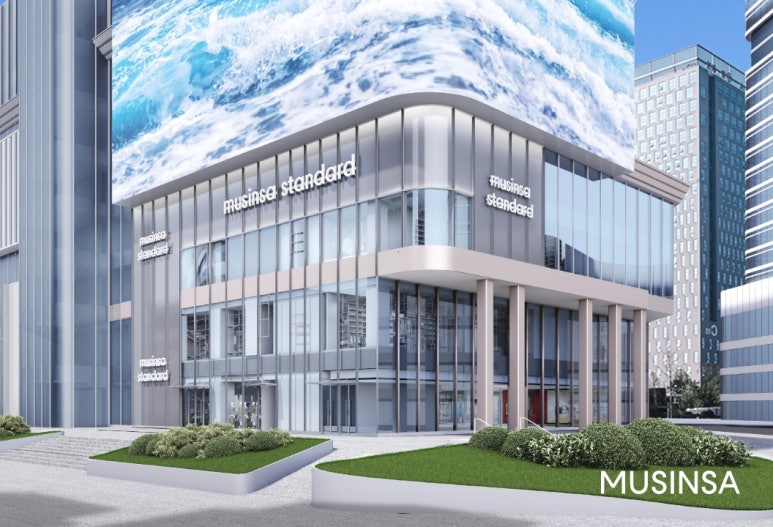
| 2017 | Launches in-house PB brand "Musinsa Standard" |
| 2019 | Raises KRW 200 billion from Sequoia Capital, recognized at a KRW 2.2 trillion valuation, becoming a unicorn |
| 2021–2023 | Expands offline — Musinsa Standard stores, co-working space "Musinsa Studio," curated space "Musinsa Terrace" |
| 2023 | Raises a Series C round from KKR, Wellington Management, and others at a valuation of around KRW 3.5 trillion. Posts an annual operating loss of KRW 8.6 billion |
| 2024 | Consolidated revenue of KRW 1.2427 trillion (+25.1%), crossing KRW 1 trillion for the first time since founding; operating profit of KRW 102.8 billion, swinging to profit |
| 2025 | Consolidated revenue of KRW 1.4679 trillion (+18.1%), operating profit of KRW 140.5 billion (+36.7%) — a second straight year above KRW 1 trillion and a record result. Names Korea Investment & Securities and Citigroup as lead IPO underwriters |
| 2026 | Holds the third annual "Musinsa Beauty Festa in Seongsu" in Seongsu-dong (Aug 21–23), with 65 beauty brands participating |
Even after becoming a unicorn in 2019, Musinsa never confined itself to online. It kept opening Musinsa Standard offline stores, the co-working space Musinsa Studio, and the curated fashion-culture space Musinsa Terrace — a consistent strategy of an online commerce company expanding into offline experience spaces.
What Happened — Three Years of Results and a Turning Point
Line up Musinsa's consolidated results for the last three fiscal years, and a clear inflection point emerges.
| Year | Revenue | YoY | Operating Profit | Net Profit | Notes |
|---|
| 2023 | KRW 993.1B | — | -KRW 8.6B (loss) | — | Loss driven by a surge in labor costs and fees paid |
| 2024 | KRW 1.2427T | +25.1% | KRW 102.8B | KRW 69.8B | First time crossing KRW 1T in revenue; swung to profit. GMV of KRW 4.5T |
| 2025 | KRW 1.4679T | +18.1% | KRW 140.5B (+36.7%) | KRW 7.7B (-41.2%) | Second straight year above KRW 1T. GMV of KRW 5T. On a standalone (non-consolidated) basis, revenue of KRW 1.3529T (+22.9%) and operating profit of KRW 145.8B (+29.7%) |
From a loss in 2023, to a swing into profit in 2024, to another 36.7% jump in operating profit in 2025 — on the surface, this is three straight years of clear improvement. Looking at the 2025 revenue mix, commission revenue makes up the largest share at 38.76% of the total, with PB (private-brand) revenue at 30.78% and directly purchased merchandise at 27.3% — a structure in which platform-commission business and the company's own brand/wholesale business now support revenue in roughly even measure.
Key Insight 1 — Operating Profit Hit a Record, So Why Did Net Profit Fall 41%?
Here's the first reversal worth flagging. 2025 operating profit came in at KRW 140.5 billion, up 36.7% year over year and a record high. Net profit, however, fell to KRW 7.7 billion — down 41.2% from the year before. Operating performance improved, yet the bottom line shrank: on its face, a contradiction.
The cause lies outside operations. Musinsa changed its accounting treatment of redeemable convertible preferred shares (RCPS) issued during earlier funding rounds, now classifying them as a liability, and fair-value losses on that liability ate into net profit. RCPS are preferred shares that, under certain conditions, give investors the right to demand redemption or convert them into common stock, and International Financial Reporting Standards (IFRS) often require preferred shares carrying a redemption obligation to be classified as a liability rather than equity. Under that treatment, the higher the company's equity value climbs — largely as set by private funding-round valuations — the larger the fair-value loss on that liability tends to grow. In other words, the more highly the market values Musinsa, the more its book net profit can, paradoxically, shrink.
This isn't unique to Musinsa — it's a common accounting illusion among unlisted unicorns that have raised large rounds via RCPS. What makes it matter here is timing: as Musinsa heads toward an IPO, how clearly it can explain the gap between the headline "KRW 140.5 billion operating profit" and the actual "KRW 7.7 billion net profit" to investors could become a central issue in valuation negotiations.
Key Insight 2 — KRW 10 Trillion vs. KRW 4-5 Trillion, the Gap in IPO Valuation
The second reversal concerns IPO valuation. In December 2025, Musinsa named Korea Investment & Securities and Citigroup Global Markets as lead underwriters, with KB Securities and JPMorgan as joint underwriters, formally kicking off IPO preparations. The company is reportedly targeting a valuation around KRW 10 trillion — roughly three times the KRW 3.5 trillion it was valued at in its Series C round in the second half of 2023.
The trouble is that the market sees it differently. Some in the securities industry argue that KRW 4-5 trillion is a more realistic figure given current results and growth prospects, calling it excessive to seek triple the valuation just two years after being valued at KRW 3.5 trillion. Some analyses note that the market cap forming in the over-the-counter market has yet to reach the level the company is aiming for. It's true that over two years, revenue rose from KRW 993.1 billion to KRW 1.4679 trillion and operating profit swung from a loss to KRW 140.5 billion — a clear, real improvement. But the company and the market disagree on whether that scale of improvement justifies tripling the valuation.
Closing this gap is seen as the central challenge of the IPO process. How persuasively Musinsa can explain the net-profit decline noted above — itself a product of RCPS accounting — to investors could also be a factor in how convincing that valuation negotiation turns out to be.
Business Impact — Beyond Fashion Into Beauty, Beyond Online Into Offline
One of the cards Musinsa is playing at this stage is expansion into beauty. The "2026 Musinsa Beauty Festa in Seongsu," held August 21–23 in Seoul's Seongsu-dong, is now in its third year as the company's largest annual beauty event, with 65 brands taking part. It linked venues across Seongsu-dong — Musinsa Megastore Seongsu, Musinsa Beauty Space, Empty Seongsu, and others — into a single "beauty roadmap," and a special zone run with cosmetics ODM company Cosmax featured 20 up-and-coming brands. For the first time this year, the event also introduced limited-edition products co-developed with popular fashion brands, making clear the company's intent to build an experience that connects fashion and beauty.
The event points in two directions of expansion at once. One is category expansion — Musinsa, long dependent on fashion as a single category, is now building beauty as a new growth axis both online and offline at the same time. The other is channel expansion — a company that started as pure online commerce keeps adding offline experience spaces such as Musinsa Standard stores, megastores, and the beauty festa, building a structure that converts online traffic into offline dwell time and purchases. Taken together, this dual expansion across category and channel reads, ahead of the IPO, as an attempt to sell the market a growth story built around "lifestyle commerce platform" rather than the narrower identity of "fashion platform." What RIT is watching in this shift is the direction of the expansion. Whether pushing beauty as a new category and offline as a new channel at the same time can convincingly narrow the gap between the KRW 10 trillion valuation Musinsa wants and the KRW 4-5 trillion the market currently sees remains the real challenge Musinsa has to solve as it moves through the IPO process.
✦RIT's Insights
What stands out most in looking back over Musinsa's last three years is that a record operating profit and a 41% drop in net profit can show up in the very same set of results. RIT sees the RCPS-as-liability accounting treatment as a trap particular to unlisted unicorns — a structure in which the more highly the market values the company, the more its book net profit gets squeezed. In practical terms, anyone working on investment or IPO deals shouldn't read operating profit and net profit as signals pointing the same direction — misjudging growth momentum off a net-profit decline alone means missing the fact that operating performance actually hit a record. As Musinsa heads toward listing, how clearly it can explain this accounting illusion to investors is what matters now.
The gap between a KRW 10 trillion target and the market's KRW 4-5 trillion view is also worth sitting with. Asking for triple the valuation two years after being valued at KRW 3.5 trillion in 2023 is undeniably an aggressive number. That said, the growth curve behind it is real — revenue up nearly 48% and a swing from loss to a record profit — so RIT reads this less as a question of "is the growth real" and more as the familiar tug-of-war that plays out repeatedly in IPO valuation markets: how much premium a given pace of growth actually deserves. Anyone in corporate strategy or valuation work should watch how this tug-of-war plays out, since it won't stay a Musinsa-only story — it's likely to become a negotiation pattern other unicorns with similar growth curves can draw on when they go public.
Finally, watching the Seongsu-dong Beauty Festa suggests that Musinsa itself knows a single "fashion platform" identity isn't enough to carry a KRW 10 trillion story. Pushing beauty as a new axis and offline as a new channel at the same time reads as a strategy to persuade IPO reviewers and investors of a bigger picture — that this is a lifestyle commerce platform, not just fashion e-commerce. Worth noting for practitioners is Musinsa's revenue mix — commission revenue at 38.76%, PB at 30.78%, and direct-purchase merchandise at 27.3%, kept in reasonably even balance rather than concentrated in one pillar, which is what underpins its current stable growth. The offline expansion should be read the same way: a company that started online continuing to add offline experience spaces — Musinsa Standard stores, megastores, the beauty festa — reflects an industry-wide recognition that online traffic alone can't build brand loyalty. The moment this expansion shows up as real revenue and profit contribution in the numbers will be the strongest evidence in Musinsa's IPO valuation debate.
Sources
- "The 'sneaker geek' community a high schooler built became Musinsa's starting point — 25 years later, it reshaped K-fashion" (Seoul Shinmun, 2026-07-13, founding background and timeline)
- Musinsa's 2025 operating profit rose 37% YoY to KRW 140.5bn — "record" revenue and profit (Musinsa Newsroom, 2026-03-31, official FY2025 results announcement)
- Musinsa, valued at KRW 10tn, names Korea Investment & Securities as lead IPO underwriter (Money Today, 2025-12-09, underwriter lineup and target valuation)
- Beauty dressed in fashion — Musinsa holds its "Beauty Festa" in Seongsu (Money Today, 2026-07-29, the Beauty Festa's 65 participating brands and event format)
- DART electronic disclosure system (dart.fss.or.kr) — Musinsa Co., Ltd. annual reports for FY2023–2025 (cited by name where a specific filing URL could not be pinpointed)