Why Walmart's ChatGPT Checkout Experiment Struggled — and What It Means for Lotte Duty Free
2026-07-24 10:09 AMKorea
Overview
On July 16, Lotte Duty Free launched Korea's first ChatGPT-based shopping service in the duty-free industry. Yet the service doesn't adopt in-chat instant checkout at all — the exact feature that tripped up Walmart just a week earlier. It isn't caution by coincidence: Korea's duty-free purchase structure, which requires passport and flight verification, made that approach unusable from the start.
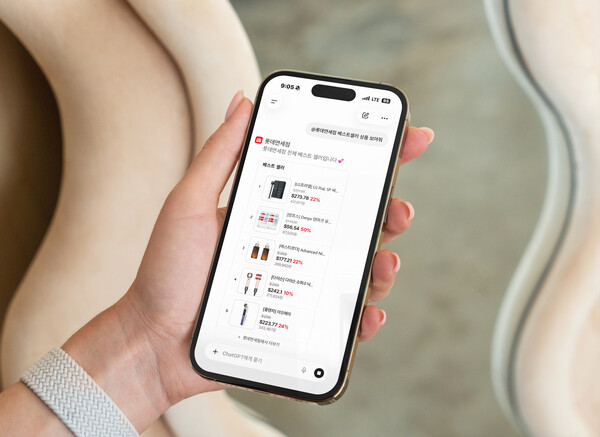
On July 16, Lotte Duty Free launched a service letting customers search for and get product recommendations from ChatGPT — Korea's first generative AI shopping service in the duty-free industry. Ask a conversational question like "recommend a perfume as a gift" or "what's on sale today?" and ChatGPT answers with Lotte Duty Free products. But there's a conspicuous gap in the service: it doesn't let you complete checkout inside ChatGPT. To actually buy a recommended item, you still have to go through Lotte Duty Free's own purchase page. As it happens, that gap is exactly the point Korean retail tends to overlook — and exactly the point worth examining closely. It's precisely where Walmart's ChatGPT experiment, which RIT covered just a week earlier, fell apart.
A screen showing bestseller recommendations via the 'Lotte Duty Free' plugin inside ChatGPT — search and recommendation happen inside ChatGPT, while the actual purchase takes place on Lotte Duty Free's own page
What Happened — Walmart Went Through This First
As covered last week, Walmart tested an "Instant Checkout" feature with OpenAI that let customers complete a purchase entirely inside ChatGPT. The results were unexpected. The conversion rate for purchases completed inside ChatGPT was three times lower than for the same products when customers were recommended the item, then redirected to Walmart's own website to check out. The cause wasn't recommendation accuracy — it was a checkout flow disconnected from cart, membership, and shipping. Walmart's own agent, Sparky, moved entirely within Walmart's own ecosystem instead, and transaction value there rose 150%. The conclusion was clear: the very attempt to complete checkout inside ChatGPT fragmented the purchase experience and dragged down conversion.
Lotte Duty Free's service launched less than ten days after this case was reported in Korea. Yet Lotte left out the exact feature that tripped Walmart up — in-chat instant checkout inside ChatGPT — from the start. Product discovery and recommendation are handled by ChatGPT; the actual purchase is routed to Lotte's own page.
Key Insight #1 — Not Caution. It Simply Couldn't Be Done
It's tempting to read this as "Lotte learned from Walmart's failure and designed smartly." But that's not really what happened. Under Korean law, online duty-free purchases require entering a passport number, English name, and departure information at the time of order, and goods must be picked up at the airport delivery counter on the day of departure, with passport, boarding pass, and exchange voucher all presented — home delivery after arrival isn't possible. Because the entire concept of duty-free rests on the premise of "goods being taken out of the country," a verification step confirming the buyer's departure is structurally baked into checkout.
Running that verification process inside a third-party platform like ChatGPT isn't realistic — technically or legally. There's little chance customs authorities or personal-data regulators would allow a design that has customers entering passport information into an OpenAI chat session. So Lotte Duty Free's decision to skip in-chat checkout wasn't caution learned from Walmart's failure — it's closer to a case where the structure of the product itself, duty-free goods, erased that option before Lotte ever had to choose. In effect, Lotte ended up abiding by, in advance, a lesson Walmart only learned after the fact — but thanks to regulation, not foresight.
Key Insight #2 — So the Real Battle Isn't Checkout. It's Discovery
An important question remains: avoiding the checkout trap doesn't automatically mean this service succeeds. The real lesson from Walmart's case wasn't just "keep checkout inside your own ecosystem." Sparky succeeded not only because checkout stayed in-house, but because product discovery and recommendation themselves ran on Walmart's own data and logic. Lotte's ChatGPT service is the opposite — it's an experiment that outsources the upstream stage, discovery and recommendation, to a third-party platform: OpenAI.
That raises a new question. It's not yet clear whether a customer who sees a ChatGPT recommendation and clicks through to Lotte's purchase page converts better than a customer who searched directly on Lotte's own app or website. If anything, if customers drop off during discovery, a loss similar to what Walmart experienced at checkout could show up earlier in the funnel instead. Lotte Duty Free avoided the checkout trap. But in practical terms, the risk inherent in outsourcing discovery itself remains untested.
Business Impact — Still an Experiment; the Data Isn't in Yet
Since the service launched less than ten days ago, concrete performance metrics like conversion rate or revenue contribution haven't been disclosed. Lotte Group is positioning the service as part of "AX Drive," its group-wide AI transformation strategy spanning retail, hotel, and service affiliates, and says it plans to strengthen personalized recommendations going forward. Two metrics will matter most. First, how the conversion rate of traffic coming through ChatGPT compares with the company's own app and website. Second, whether this channel brings in genuinely new customers, or simply redirects the path of customers who would have bought anyway. Until both are confirmed, it's too early to attach any meaning to this beyond the "first in Korea" headline.
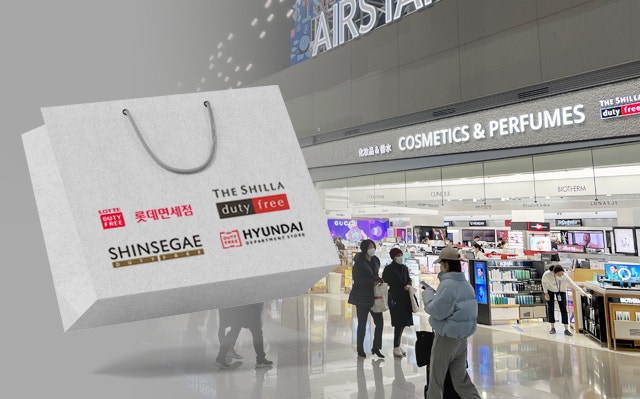
Shilla, Shinsegae, Hyundai, and other competing duty-free operators are likely to launch similar conversational shopping experiments soon. But as long as they sit on the same regulatory structure, in-chat checkout inside ChatGPT won't be an option for them either. Korean duty-free's AI commerce race was always going to be fought over "outsourcing discovery," not "outsourcing checkout."
Lotte Duty Free avoiding one of Walmart's traps thanks to regulation is no reason for comfort. An unvalidated next trap — the risk of outsourcing discovery — has already taken its place.
✦RIT's Insights
The most interesting part of this case is the need to distinguish what was done well by accident from what was done well by design. Reading the media coverage alone, it's easy to conclude that Lotte Duty Free studied Walmart's failure and designed around it cleverly — but in reality, the legal structure of duty-free purchases most likely never allowed any other option to begin with. This distinction matters because, if it's the latter, there's no guarantee the same safety net will automatically be in place the next time Lotte designs an AI service. A risk that regulation happened to protect against and a risk a company deliberately manages need to be handled differently. For anyone in charge of AI or digital transformation, the lesson here is clear: before getting ambitious about completing checkout inside a third-party platform like ChatGPT, check first whether your industry is legally or structurally required to keep checkout inside its own channel — and if that constraint exists, treat it as an already-validated safe design to build on, rather than a limitation.
Two more things are worth flagging in practice. Anyone watching CRM and data should track discovery-and-recommendation-stage inflow-to-conversion metrics before checkout metrics — if customers arriving via ChatGPT convert at a lower rate than customers who searched directly on Lotte's own app or website, that's a signal that outsourcing discovery is already functioning as a point of loss. On the regulatory and legal side, the more an industry — like duty-free — has identity verification legally bound to checkout, the more it needs to build a habit of running personal-data and customs reviews in parallel from the earliest planning stage, every time a new channel that touches identity data appears. What concerns RIT about this case is that if this kind of review keeps ending in an after-the-fact "it happened to be safe," the luck may not hold next time.
One more point worth making: this service "protecting checkout" and "outsourcing discovery well" are two entirely different claims, and right now there's no data at all to judge the latter. Most domestic media coverage focused on the "industry first" label, but whether this experiment is actually a success or failure won't be knowable until conversion data emerges months from now. In RIT's view, it would be more rational for Shilla, Shinsegae, and Hyundai to wait and watch the real metrics from Lotte's first experiment rather than rushing out similar services of their own. A competitor claiming the "industry first" title doesn't mean you need to follow immediately. Being a validated second mover, rather than claiming to be first, may be the smarter strategy in this case.