Average Spend Fell, Yet VIP Sales Rose — How Korea's Big Four Duty-Free Operators Did It
2026-07-15 8:04 AMKorea
Overview
At the height of the daigou era, foreign customers' average spend at Korean duty-free stores ran into the tens of millions of won. Once the market re-centered on independent travelers (FIT), that figure collapsed to KRW 200,000-500,000. Yet in Q1 2026, Korea's four major duty-free operators — Lotte, Shilla, Shinsegae, and Hyundai — turned a profit simultaneously for the first time ever. The answer wasn't price, it was service: Shinsegae's VIP airport chauffeuring, Lotte's baggage delivery and travel curation, and Shilla's private lounges are manufacturing a new class of big spenders within the FIT segment.
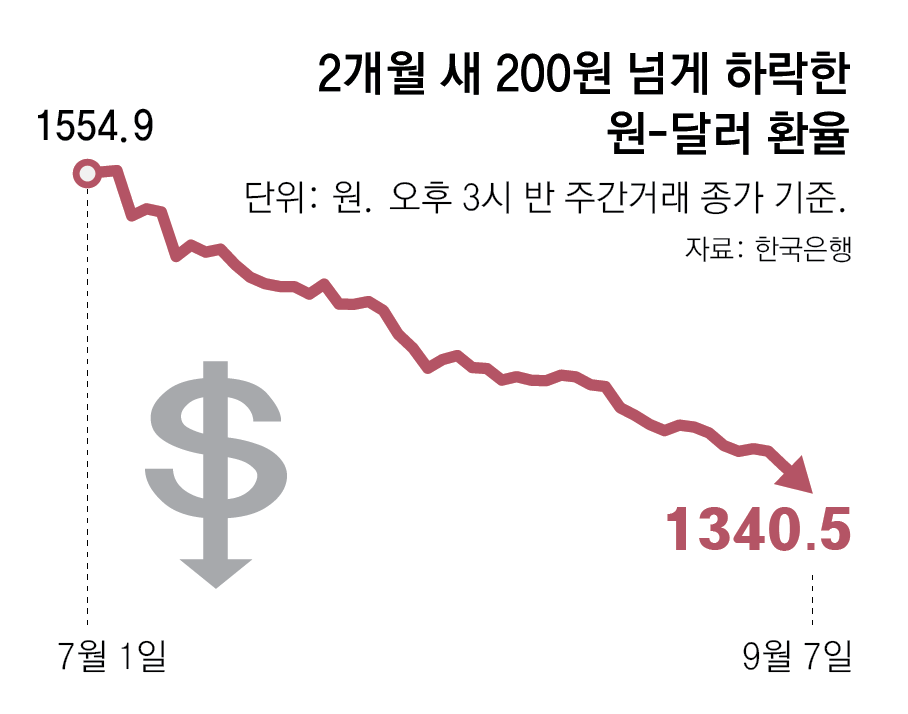
Just a few years ago, revenue at Korean duty-free stores was driven by a small number of daigou (bulk resale agents), each spending tens of millions of won per visit. But after Chinese government crackdowns and regulation on referral commissions collapsed that structure, the market re-centered on independent travelers (FIT), and average spend per foreign customer fell to the KRW 200,000-500,000 range — roughly a hundredth of what it had been. By any conventional logic, that should have meant a clear decline in performance. Yet in Q1 2026, Korea's four major duty-free operators — Lotte, Shilla, Shinsegae, and Hyundai — turned a profit simultaneously for the first time ever. Lotte Duty Free's operating profit jumped 111% year-over-year, its best result in three years. How was this reversal possible in a market where average spend had collapsed?
What Changed — From Daigou to FIT
Under the daigou model, the duty-free business was straightforward: pay high referral commissions to a small number of bulk-buying resellers, funnel volume to them, and sustain revenue scale through thin-margin, high-volume sales. But that structure was thin-margined by design — the commission burden was so heavy that profitability kept deteriorating even as revenue grew. Once Chinese crackdowns on daigou and shifting travel policy shook that foundation, the industry began rebuilding itself around independent travelers (FIT). In place of tour-bus groups sweeping up predetermined items, the core customer became travelers who plan their own itineraries and hunt down brands they've seen on social media. Per-customer spend collapsed as a result, but profit began to appear in the space left behind once the low-margin volume was cleared out. The collapse in average spend isn't evidence of crisis — it's closer to the residue of revenue the industry deliberately shed.
Key Insight #1 — A Competition to Manufacture "New VIPs" Through Service, Not Price
The real question comes next: what fills the space left by that low-margin volume? The industry's answer was to identify the highest-spending customers within the independent-traveler segment and layer exclusive services on top for them. On July 13, Shinsegae Duty Free became the first in the industry to launch a "VIP airport mobility service." Top-tier S.VIP and VIP customers can specify a time and location, and a dedicated driver picks them up and drops them off between their home and Incheon or Gimpo airport, with flight-data API integration to handle delays and schedule changes. Shinsegae plans to expand this into a hotel-to-airport service for foreign customers as well.
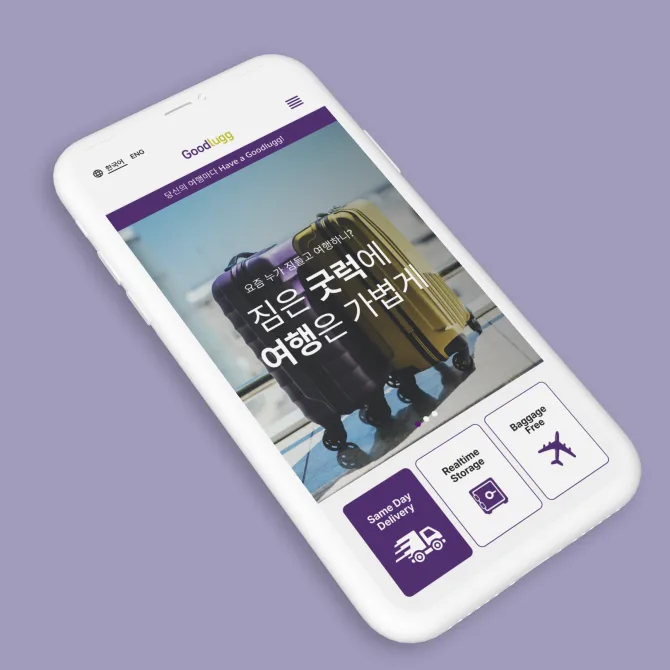
Lotte Duty Free is moving in a similar direction. In April, it partnered with global baggage delivery and storage platform "Goodlugg" to deliver luggage on behalf of its top-tier VIP customers during their trip, and in May it partnered with luxury travel platform "Paris Class" to offer bespoke travel services including itinerary design and destination recommendations. Shilla Duty Free offers its top "Black Prestige" tier customers a private lounge, valet parking, and hotel-linked benefits, and is expanding VIP-only events like whiskey tastings and makeup shows.
Lotte Duty Free's VIP travel baggage-delivery service, launched in partnership with baggage delivery and storage platform Goodlugg — the service competition is spreading to eliminate friction across the journey beyond the store itself
The commonality across all three companies is clear: differentiation through removing friction in time and movement, rather than price discounts. In the daigou era, "big spenders" were simply people who already had purchasing power. The "big spenders" duty-free operators are now cultivating are customers manufactured through the service experience itself. VIP tier has flipped from being the result of spending to being the cause that drives it.
This pattern isn't confined to duty-free. Shinsegae Department Store is expanding VIP-only services across its group affiliates in the same way, running a VIP lifestyle-curation platform called "THE SHOWCASE" that previews premium brands like Polestar to top-tier customers first. Duty-free's VIP competition is tied to a broader movement across the entire Shinsegae Group.
Key Insight #2 — Manufacturing "Only Available Here" Through Products, Too
Alongside services, the competition to secure exclusive products and brands is just as fierce. Lotte Duty Free became the first and only duty-free operator in Korea to carry Boucheron in 2018, and followed up with a string of exclusive high-end jewelry brands including Damiani and Pomellato in 2025. As a result, jewelry and watch sales rose about 41% year-over-year in Q1 2026 — a combination of high-value travel-souvenir spending and rising demand for small luxury items. More recently, it introduced "Hennessy X.O Spirit of Travel Seoul Edition," a limited-edition cognac exclusive to Korea's duty-free channel.
Shinsegae Duty Free brought in 80 K-beauty brands exclusively and also bet on K-food products unavailable elsewhere. When it introduced "Isac Toast Sauce" — previously sold only for export — as a duty-free exclusive, the entire supply sold out in a single day on May 29. Shilla Duty Free launched an exclusive ginseng liqueur, "Ryu Red 53," co-developed with Korea Ginseng Corporation, and has expanded exclusive spirits aimed at enthusiast collectors, from a limited edition of Japanese whisky Hibiki to eight varieties of Taiwanese gaoliang liquor "Kinmen." It has also added more than 100 additional K-beauty brands and opened a dedicated K-beauty concept store, "Maison de Cosme," at its Seoul store.
The logic behind this competition mirrors the service competition. For travelers chasing social-media trends and personal fandoms, "a product you can't find at a competitor" becomes a real driver of visits and purchases. The axis of competition that used to run on price has shifted to scarcity.
Business Impact — A Rebound Confirmed in the Numbers
The results of this strategic shift are already showing up in performance. Korea's four major duty-free operators turned a profit simultaneously for the first time in Q1 2026, and Lotte Duty Free's operating profit reached KRW 32.3 billion, up 111% year-over-year — its best result in three years. Lotte Duty Free's total sales rose 43% year-over-year in the May 1-5 period, with sales to Chinese FIT customers up 111%, driving that growth. At Shinsegae Duty Free's Myeongdong store, average daily sales among foreign customers for major beauty brands rose eightfold, with one particular brand up seventeenfold, and the beauty category overall grew 160%. Hyundai Duty Free's foreign-customer sales rose 77.1%.
The fact that average spend fell to a hundredth of its former level while results improved should be read as a change in the quality of revenue, not just its quantity. Low-margin, high-volume sales were cleared out, and consumption centered on high-margin services and exclusive products filled the gap. Duty-free is repositioning itself away from "a place to buy things cheaply because it's tax-free" and toward "a place you can only shop at, and only be treated like this at."
From a practitioner's view, this shift raises clear questions worth acting on. Rather than tying VIP tier purely to past purchase performance, it's worth flipping the design so service benefits actively drive purchases instead. As shown by Shinsegae and Lotte, airport pickup, baggage delivery, and travel curation remove friction ahead of the purchase itself and naturally lift customers into higher tiers. On the product side, the more price competitiveness comes under pressure, the more exclusivity itself — "you can only buy this here" — becomes a draw for foot traffic; that's worth keeping in mind. Beyond sourcing overseas products unavailable through domestic channels, it's also worth considering the reverse — sourcing domestic products originally made for export, the way Isac Toast Sauce was, as duty-free exclusives. On the finance/strategy side, tracking changes in margin structure has become more important than tracking gross revenue alone. As this case shows, profitability can actually improve even when revenue is flat or declining, if low-margin volume is cleared out and replaced by a higher share of high-margin services and products — so the simplistic reading that "flat revenue equals crisis" needs to be guarded against. It's also easy to overlook that, unlike group tourists, independent travelers (FIT) have an entirely fragmented journey — accommodation, airport, store, and the trip home are all disconnected. This service competition shows that real differentiation doesn't come from designing the in-store experience alone, but from integrating the journey beyond the store as well — booking, transport, delivery.
Duty-free filled the space left by departing daigou not with price, but with service and scarcity. The fact that all four operators turned a profit simultaneously even as average spend fell to a hundredth of its former level is no accident — it's the result of clearing out low-margin volume and deliberately replacing it with higher-margin consumption. The VIP airport chauffeuring and exclusive-brand competition playing out among duty-free operators right now are all answers to the same question: in a market where the big spenders have vanished, how do you manufacture new ones?
✦RIT's Insights
The most striking part of this reversal is that the industry didn't simply accept the collapse in average spend — it turned that collapse into an opportunity for structural improvement. Headlines about falling daigou sales read easily as crisis, but in reality, this is closer to low-margin volume that had been eating into profitability finally clearing out, replaced by higher-margin consumption. What concerns RIT looking at this data is that the habit of judging industry conditions by a single number — gross revenue — still lingers widely, both inside the industry and out. Looked at that way, a structural shift like this one gets missed nine times out of ten.
What's even more interesting is that the three companies each chose a different weapon. Shinsegae is competing on ease of movement (airport mobility), Lotte on curating the entire journey (baggage delivery, travel planning), and Shilla on space and experience (lounges, invitation-only events). All three strategies aim at the same goal — capturing top-tier customers through something other than price — but the choice of weapon suited to each company's own brand assets reveals a real difference in execution. Other domestic retailers designing VIP strategies should ask first what differentiation they themselves can execute best, rather than simply copying a competitor.
That said, this strategy has a clear limitation: service competition is easy to imitate. Once Shinsegae launches airport mobility, Lotte and Shilla are likely to roll out similar services soon after, and eventually service itself becomes the new baseline again. At that point, the center of gravity in competition will shift back toward assets that are harder to replicate, like exclusive brands and products. The fact that duty-free operators are already competing on both service and product simultaneously suggests they've already anticipated this dynamic. The real question is whether this VIP-manufacturing strategy is a structure that can repeat next quarter and next year, or whether it ends up as a brief effect riding on early buzz. That's something that will take a few more quarters to judge.