Shinsegae Duty Free Trims Cosmetics, Expands Keyring and Fashion Accessories Stores at Incheon Airport
2026-07-13 11:52 PMKorea
Overview
On July 2, Shinsegae Duty Free completely overhauled its fashion and lifestyle zone at Incheon Airport Terminal 1, its first renewal in two and a half years. Curiously, just three months earlier, Shinsegae had surrendered its cosmetics and perfume concession (DF1) at the same airport, eating a penalty to do so. The cash-cow category got let go, while the editorial stores selling clothes, bags, and keyrings got the investment instead. This selective focus hints at where the duty-free industry's next survival strategy is headed.
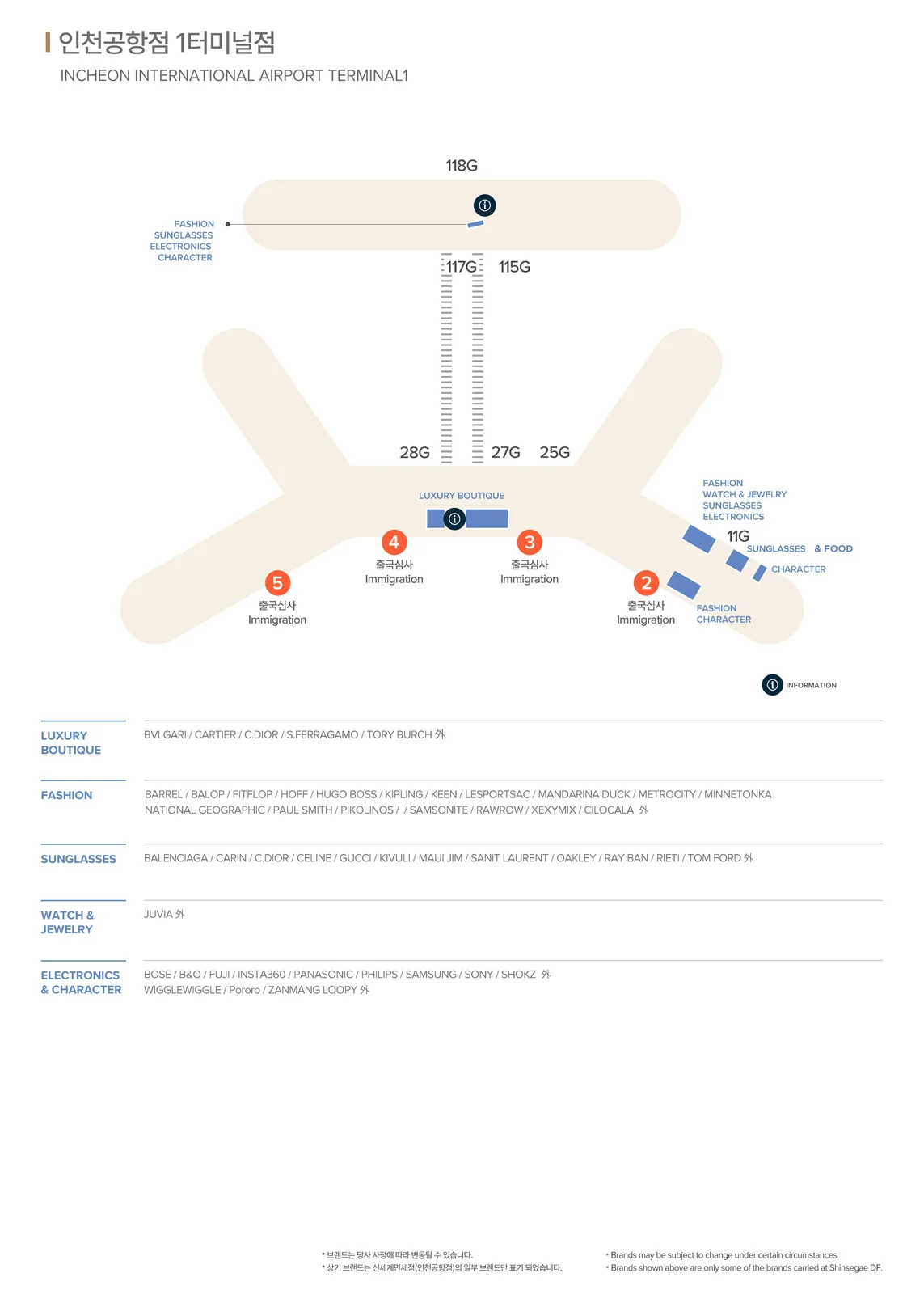
On July 2, Shinsegae Duty Free completely renovated its fashion and lifestyle stores near Gate 11 at Incheon International Airport's Terminal 1 — its first overhaul since the stores opened two and a half years ago. "Bag Archive," a collection of travel luggage; "Travel Lounge," curated travel goods; "Swim House," swimwear and resort products; "Keyring Club," character keyrings — the names alone sound more like an editorial boutique than a duty-free shop. But set this news next to a headline from three months earlier and a different picture emerges. On April 27, Shinsegae Duty Free surrendered its cosmetics and perfume concession (DF1) — the highest-margin category at Incheon Airport — eating a KRW 190 billion penalty to do it. It let go of its cash cow while pouring investment into the zone selling clothes, bags, and keyrings. This wasn't a coincidence; it's a signal of where the duty-free industry is currently shifting its weight.
What Changed
Here's the scale and composition of the renewal.
Brands: About 110 brands total, roughly 40 of them exclusive
Categories: Six — eyewear, travel goods, fashion apparel, accessories, tech, and gifts
New arrivals: Travel and lifestyle brands including Brandon, Ticket to the Moon, Miyanshol, UGG, FitFlop, and Keen, plus an expanded fashion lineup from brands like Valentino and AllSaints
Tech products: Meta AI eyewear with voice-command photo and calling functions, and Garmin running watches with GPS and music playback
K-content: An expanded lineup of K-gift items including lifestyle brand "Sobaek" and National Museum of Korea cultural merchandise
A Shinsegae Duty Free representative said, "We consolidated travel essentials and lifestyle brands to reflect airport travelers' shopping flow," adding, "we'll keep expanding exclusive brands and differentiated content to establish ourselves as the first shopping destination travelers seek out before boarding."
The location of this renewal also deserves attention. Gate 11 sits at the very far end of the T1 departure hall's traffic flow, making it a difficult spot to draw customers even under normal conditions. Compounding that, Asiana Airlines' move to Terminal 2 has reduced the number of departing passengers passing through T1 in the first place. Against this double handicap — shrinking foot traffic and an unfavorable position along the concourse — Shinsegae Duty Free's success in attracting a diverse set of new brands, including K-fashion labels, is itself a notable achievement.
Departure concourse map at Incheon Airport Terminal 1 — Gate 11 sits at the very far end of the walking route
Still, despite this effort to attract brands, the zone's performance reportedly remains weak. Which is to say: the skill of assembling a strong brand portfolio and the ability of a location to convert that portfolio into actual sales are two separate problems.
Key Insight #1 — Surrender and Expansion Are Two Sides of the Same Strategy
On the surface, these look like two contradictory decisions — one a retreat, the other an expansion. But once you place them in the context of the broader Incheon Airport concession reshuffle, they line up as a single, coherent logic.
When Shilla Duty Free and Shinsegae Duty Free won their bids in 2023, they submitted high rents of roughly KRW 9,000 per passenger to secure the DF1 and DF2 zones (cosmetics/perfume and liquor/tobacco, respectively). But as Chinese group tourism shrank and daigou (bulk resale agent) commissions bled margins, these zones ran continuous losses, and both companies ultimately withdrew — paying penalties to exit seven years into ten-year contracts. The new entrants, Lotte and Hyundai, took over the same zones at rents roughly 40% lower, in the KRW 5,000 range. In other words, DF1 and DF2 are no longer categories that generate revenue reliable enough to justify a fixed high rent.
From Shinsegae's perspective, this category came with heavy rent obligations and steadily declining negotiating leverage with luxury and cosmetics brand headquarters. The fashion, lifestyle, and gift zones, by contrast, offer relatively more flexible lease terms — and more importantly, they're a space where Shinsegae itself decides which brands to combine and how. If cosmetics and perfume was "a business where you just pay rent inside rules someone else set," fashion and lifestyle is, in RIT's view, "a business where the retailer writes the rules itself." This renewal, then, is better read not as retail contraction but as a redeployment of resources toward areas the company can actually control.
Key Insight #2 — The "Editorial Store" Format Carries a Built-In Weakness: One-Way Customers
Themed editorial spaces like Bag Archive, Travel Lounge, and Keyring Club are a proven format in the department store and lifestyle retail world. The conventional wisdom is that when merchandisers curate brands into a narrative rather than simply stocking shelves, it lifts both dwell time and average spend.
But duty-free has one decisive condition that department stores don't: for most customers, this is the first and last time they'll ever encounter that particular store. A department store editorial shop benefits from repeat visitors building brand loyalty over time, but airport duty-free is overwhelmingly one-way outbound traffic — the window between "discovery" and "purchase" is extremely short, and if there's no online or offline touchpoint carrying that discovery forward, it ends as a one-time impression. New lifestyle brands like Brandon and Miyanshol, which Shinsegae introduced in this renewal, have low existing brand awareness, so their first airport exposure carries real marketing value — but without a mechanism connecting that interest to Shinsegae's online mall or domestic distribution channels, it risks becoming "a shelf you glance at once and walk past." The format itself matters less than whether CRM and online integration can convert that discovery into a repeat purchase — that's what will really determine whether this strategy succeeds.
The inclusion of wearable tech products like Meta AI eyewear and Garmin watches should be read in the same light. These products don't typically carry a strong duty-free discount appeal — they're a low-margin category. Rather than a meaningful revenue contributor, they function more as a loss leader generating buzz — "all the trending brands are here" — that turns the store itself into a piece of content worth visiting. In other words, this renewal is less about the profitability of any individual product line and more about selling a positioning: "the first place you stop before boarding."
Business Impact — The Yardstick for Success Needs to Change First
Whether this strategy is the right direction remains unproven. Even if the direction is correct, the editorial-store approach can't be properly evaluated using duty-free's traditional KPIs of "revenue and average spend per customer" alone. A model that recruits a large number of new brands on top of a one-way customer base means smaller sales volume per individual brand, and greater complexity in managing inventory turnover and exclusive-brand contract terms (returns, inventory-carrying conditions). The real payoff this strategy is chasing lies in metrics that haven't traditionally gotten much attention — dwell time, brand discovery rate, and conversion into the online mall or cross-border e-commerce channel. Without a system to track these metrics, judging this renewal on revenue figures alone risks prematurely writing off a strategy that's actually working — or, just as easily, missing a real problem. In RIT's view, changing the store is only the beginning; the real contest will be decided at the next stage, where discovery either does or doesn't turn into a repeat purchase.
✦RIT's Insights
Reading this renewal simply as trend coverage of "duty-free does editorial stores too" only tells half the story. What's genuinely interesting is the timing — the same company, at the same airport, closed one door and opened another wider within three months of each other. Stepping back from a category like cosmetics and perfume, where rent burden is heavy and negotiating leverage is thin, while putting weight behind an area where the retailer can pick the products and write its own story — that's how the duty-free industry is surviving right now. That said, from an MD/merchandising standpoint, this kind of shift toward an editorial-store format also carries hidden costs. The more diverse the SKU mix gets, the harder inventory turnover becomes to manage, and the more new brands are involved, the more contract risk grows — since each exclusive-brand deal's return and inventory-burden terms have to be worked out individually.
But anyone who knows the ground reality needs to start with this store's location. Gate 11 sits at the very far end of the T1 departure concourse. On top of that, Asiana Airlines' move to Terminal 2 has reduced the number of departing passengers passing through T1 in the first place. Shrinking foot traffic combined with a position outside the main flow — that's about as difficult a condition for attracting brands as it gets. Filling a spot like this with a diverse mix of new brands, including K-fashion, is a real accomplishment worth recognizing — proof the merchandising organization wasn't sitting idle. That said, there's a gap worth flagging from a practitioner's view: whether laying out the concourse by travel purpose — Bag Archive to Travel Lounge to Swim House — is actually effective should have been built in from the start as a design that measures zone-level dwell time and conversion with data.
But that's as far as it goes. Despite this effort, the zone's performance reportedly remains weak. This case shows that good planning and a good location are two different problems. An airport customer meets that store exactly once — they don't come back next month the way a department-store shopper would. If a spot at the far end of the concourse is starved of foot traffic to begin with, no amount of smart brand curation can overcome the limited chance of ever being discovered. Recognizing that this is a location problem, not a content problem, is what it takes to make the right next move. From a brand-partnerships standpoint, an airport editorial zone can be a low-cost channel for new and niche brands to get their first exposure to a global traveler audience. But that has to come with a clear condition, nailed down at the placement-negotiation stage: without a mechanism linking that exposure to the brand's own online mall or social channels, it ends up as nothing more than a shelf glanced at once and walked past.
So it's worth restating: this strategy's success shouldn't be judged by next quarter's revenue figures alone. The first step is separating whether today's "weak performance" comes from thin content or a bad location. If it's the former, the merchandising needs more work; if it's the latter, the answer isn't pouring more investment into this spot but considering relocating the editorial concept to a zone where foot traffic is actually alive. Writing it off as "didn't work" after a few months, without diagnosing the cause, risks landing on exactly the wrong conclusion at exactly the wrong moment. Making that diagnosis possible requires the CRM/online-integration team to have follow-up mechanisms — QR-code linking, reminder marketing — in place from the moment the editorial zone opens, to pull customers who discover a brand at the airport into the online mall or cross-border e-commerce channel. Corporate planning, too, shouldn't grade this renewal on existing revenue/average-spend KPIs alone — it needs to build and track separate metrics like dwell time, brand-discovery conversion, and online-linked repeat-purchase rate. Only then, next quarter, can the company pinpoint exactly what went wrong instead of rushing to conclude "it just didn't work."