The EU's Small-Parcel Tariff Targeted Shein and Temu — Did It End Up Favoring Them?
2026-07-10 2:40 PMGeneral
Overview
Starting July 1, the EU began levying a flat €3 tariff per item on parcels under €150, taking direct aim at Shein, Temu, and AliExpress. But both companies had already secured local European warehouses and are routing around the tariff. The regulation was aimed at the giant platforms — the ones actually left stranded are the small and midsize sellers who can't afford to build a warehouse.
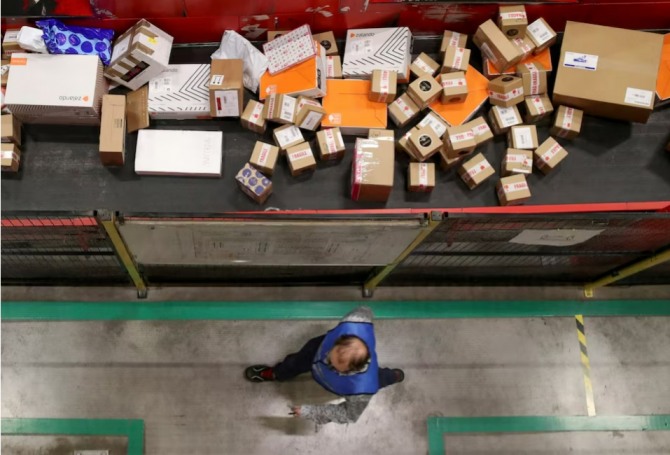
On July 1, the EU scrapped its tariff exemption for e-commerce parcels under €150. Under the new structure, each item classification (HS code) in a parcel carries its own flat €3 charge — a parcel containing one silk blouse and two wool blouses would carry €6 in total. The target was unmistakable: of the 4.6 billion low-value parcels that entered the EU in 2024, 91% originated in China, and the bulk of that volume was generated by Shein, Temu, and AliExpress. Yet ten days after the tariff took effect, neither company's stock price nor shipment volume shows much sign of disruption. The reason is simple — both had already laid a workaround before the tariff ever took effect.
EU imposes a €3 per-item tariff on parcels under €150 (effective July 1, 2026)
What Changed — The Mechanics of the €3 Charge
This measure is a bridge tariff, applied on a temporary basis through July 2028. After that, a full EU tariff overhaul is scheduled to apply formal rates of 0–17% by product category — meaning today's €3 flat charge isn't the final form but a transitional device. Even so, its immediate impact isn't small. For ultra-cheap items in the €10–20 range, a single per-item tariff can wipe out the entire margin on its own, and the burden feels even heavier in countries like Italy and France, which layer their own additional per-parcel fee of €2–5 on top. The rationale EU finance ministers cited in agreeing to the measure was clear: while domestic small businesses have been paying VAT and duties as normal, Chinese cross-border commerce has been exploiting the low-value exemption to encroach on the European market essentially duty-free.
Key Insight — The Game Was Already Over Before the Rule Took Effect
So far, this is a predictable story. What's genuinely interesting is that the very companies this rule targeted came through it largely unscathed.
Shein had already opened a 740,000 sqm logistics hub near Wrocław, Poland, back in December, and added a roughly 124,300 sqm warehouse in Cannock, in England's Midlands, this past May — part of a plan to invest €250 million in European logistics over five years. Temu has gone a step further, building out ten self-operated warehouses across the EU, with a target of fulfilling 80% of European orders from local inventory.
The mechanics behind how this structure sidesteps the tariff are simple. A parcel shipped directly from China to an individual consumer is tariffed per shipment (more precisely, per item). But commercial bulk cargo entering a European warehouse only has to clear customs once. In other words, once the "China to EU warehouse" leg has cleared customs and the tariff has been settled, the "EU warehouse to consumer" leg counts as domestic delivery and carries no additional tariff. Both platforms have already started labeling product pages "Shipped from EU warehouse," letting shoppers actively pick out tariff-free items. They haven't just dodged the regulation — they've turned it into a visible marketing feature aimed straight at consumers.
This is where the real irony surfaces. The tariff was designed to "stop Chinese cross-border commerce from riding free" — but the ones who had already finished riding free, by the time the rule took effect, were Shein and Temu themselves. Both companies had the capital to preemptively pour hundreds of millions of euros into European logistics infrastructure ahead of the rule taking effect, and as a result the tariff went into effect without meaningfully denting their revenue structure. Meanwhile, smaller cross-border sellers who can't afford to build that kind of warehouse network — from individual Chinese sellers to small Korean D2C brands — remain stuck shipping directly from China (or Korea) to the EU, and for them the €3 tariff lands as a direct hit that eats straight into margin. The regulation was aimed at the giant platforms; the ones who actually tripped over it turned out to be the smaller competitors trying to imitate them.
Business Impact — And Where Korean Sellers Fit In
This structural shift cuts two ways for Korea's e-commerce ecosystem.
First, with their path into Europe now narrower, AliExpress, Temu, and Shein may pour more effort into the comparatively softer Korean market. Their presence has already been growing in Korea's low-price household goods and fashion categories — the volume and marketing resources pushed out by EU regulation now have an incentive to redirect toward Korea instead.
Second, small Korean K-beauty brands' cross-border sales into the EU sit directly in the blast radius. For low-priced beauty items under €10 — sheet masks, lip tints — a €3 per-item tariff can evaporate 30–50% of margin the moment it's applied. The problem is that most of these brands aren't remotely scaled enough to build their own EU warehouse the way Shein or Temu did — in other words, the large C-commerce platforms carved out a workaround, while small Korean sellers in a similar position don't have the capital to get onto that same workaround. Partnering with a third-party logistics provider (3PL) or platform that offers local European warehousing and fulfillment is turning into less of an option and more of a precondition for entering the EU market at all. In RIT's view, this pattern is likely to repeat itself across other regulations as well — regulation often filters out, first, not the party it was aimed at but the smaller competitors chasing that same target, and this EU tariff is a textbook case of exactly that. The ripple effects aren't confined to Europe; they extend directly into Korea's own cross-border ecosystem.
✦RIT's Insights
Every regulation announcement like this brings back the same observation: there's always a lag between the moment a law is written and the moment it actually starts functioning, and whichever side has the capital to fill that gap wins. Shein and Temu had already poured hundreds of millions of euros into European warehouses since last year — while the EU was fine-tuning its tariff code, they were fine-tuning their logistics network. Cross-border e-commerce teams need to rebuild their logistics strategy around the assumption that shipping directly from China no longer holds cost competitiveness. Whether an EU-based fulfillment partner is already secured has become the first gate to entering the European market.
What's genuinely worrying is Korea's small and midsize beauty sellers. Once a €3 tariff lands on a single sheet mask, the math on that business stops working — and telling them to "just build your own warehouse in Europe" isn't realistic advice. RIT's suggestion would be to rework the sales structure for the sub-€10 tier first: sold as single units, the per-item tariff lands in full, but bundling products together creates room to spread that tariff burden across a higher combined unit price. In the end, the only real answer is economies of scale through a 3PL or shared fulfillment arrangement — and whoever lays that groundwork first will decide who wins the next phase.
One more thing worth flagging — the local European brands who assumed this tariff would finally give them room to breathe shouldn't get too comfortable either. Shein and Temu, with their EU warehouses already in place, have started using the "tariff-free" label as a marketing weapon of their own. Anyone shaping domestic retail and e-commerce strategy should start monitoring, from now, whether the volume and marketing resources these two companies lost in Europe get redirected toward the comparatively softer Korean market — competitive pressure in low-price household goods and fashion in particular could intensify quickly. There's a lesson for policymakers here too: this case shows that eliminating a low-value exemption doesn't automatically weaken a giant platform's dominance. If similar regulation is brought to Korea, it needs to be paired with support measures that don't widen the gap between well-capitalized large platforms and smaller sellers who lack that capital — otherwise the regulation meant to check a competitor risks becoming that competitor's weapon instead.