Why Incheon T2 Put a Food Court Next to Its Luxury Boutiques
2026-06-29 9:08 AMKorea
Overview
Incheon International Airport's Terminal 2 has become a testing ground for reshaping airport commercial space. Louis Vuitton and Chanel have opened large duplex boutiques, pushing duty-free retail further upmarket, while CJ Freshway's premium food court Gourmet Bridge has moved into the same terminal to strengthen the F&B experience. On the surface, it's a dwell-time strategy that pairs luxury retail with premium F&B — but underneath, a structural tension is building between luxury brands and the airport operator over who controls the space.
At Incheon Airport's Terminal 2, a luxury boutique and a food court now share the same floor. That simple fact captures, in miniature, the shift now underway in Korean airport retail.
Louis Vuitton and Chanel's Duplex Boutiques — A Signal of Duty-Free Going Luxury
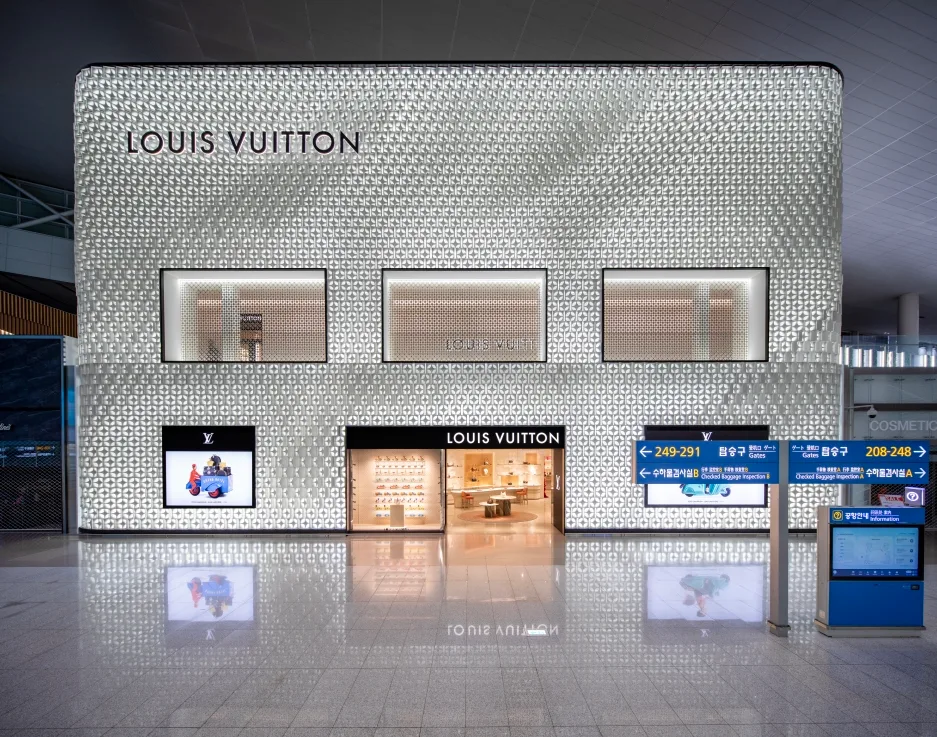
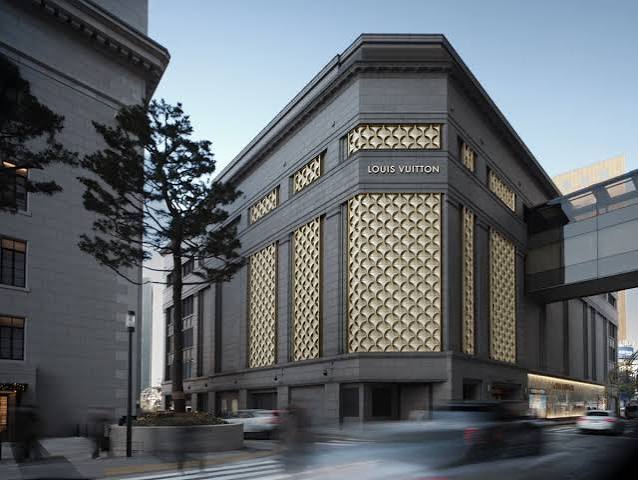
In February 2025, Shinsegae Duty Free opened a Louis Vuitton store at Incheon T2 — the brand's first at T2 in the seven years since the terminal opened. Alongside the opening came plans for a duplex store starting on the 3rd-floor shopping area and expanding up to the 4th floor. It marked the first time a Louis Vuitton duplex store had appeared inside a domestic airport duty-free operation, which gave the launch outsized symbolic weight.
Louis Vuitton boutique, Incheon Airport Terminal 2
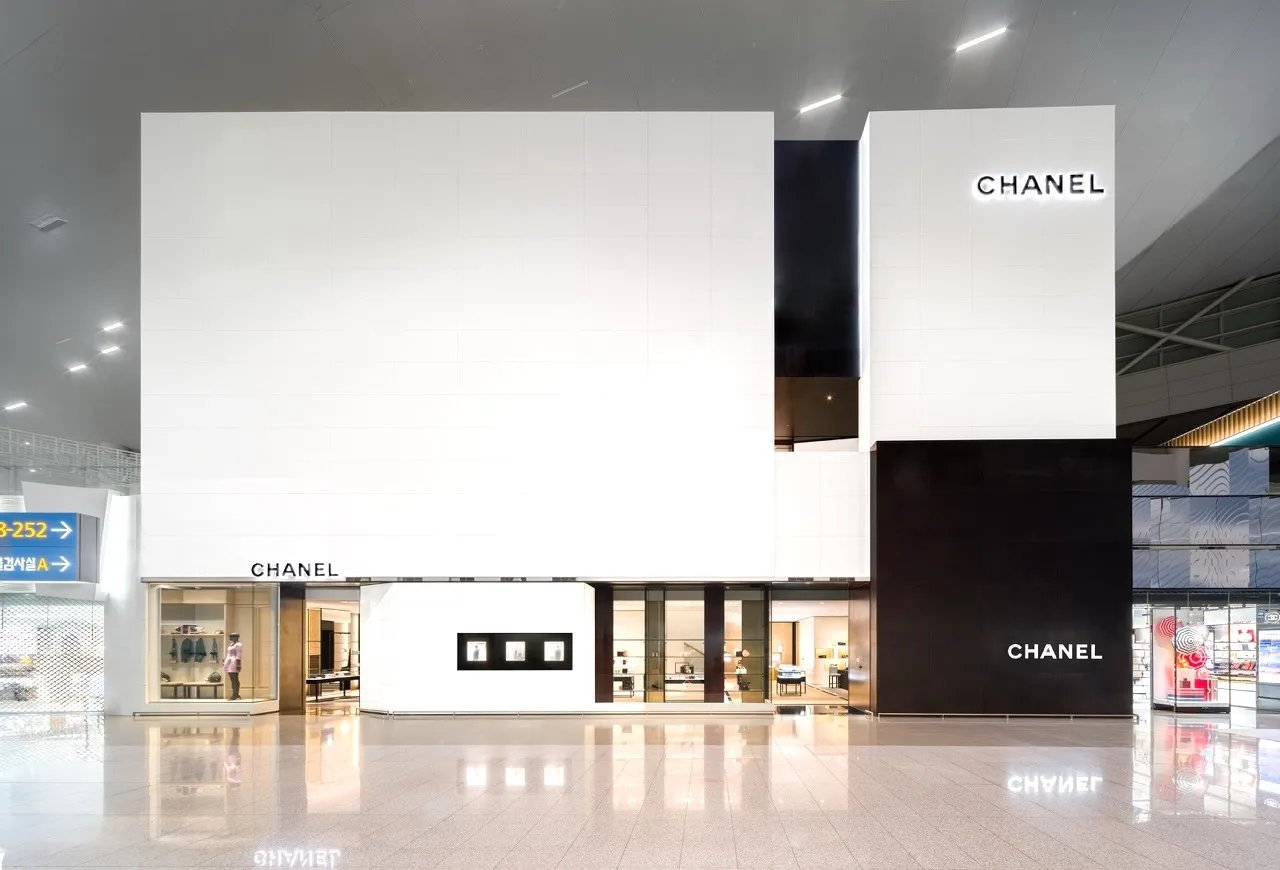
Chanel followed in August 2025, opening a two-story "Chanel Duplex Boutique" at T2 through Shilla Duty Free. The store is roughly three times the size of its predecessor and was introduced as a large-format boutique carrying apparel, bags, shoes, and watches. The design came from architect Peter Marino, Chanel's longtime collaborator, who filled the space with contemporary art — aiming for a brand-experience venue rather than a plain sales floor.
Chanel boutique, Incheon Airport Terminal 2
Gourmet Bridge — Turning F&B Into a Culinary Platform
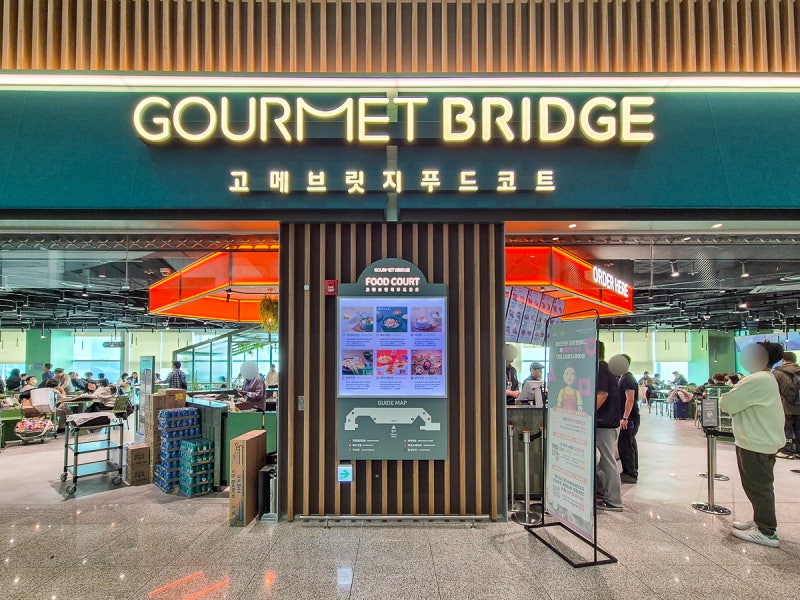
Around the same time, Incheon Airport pushed a parallel premiumization strategy on the F&B side. CJ Freshway opened the premium food court "Gourmet Bridge" on the 4th floor of T2's east wing in January 2025. The first outlet spans 315 pyeong (1,042 m²) with 320 seats, and the company has laid out plans to expand to a total of four outlets across Incheon Airport, totaling roughly 1,485 pyeong and 1,500 seats.
Gourmet Bridge is not a conventional airport food court. CJ Freshway has framed the space as "a culinary bridge connecting K-food to the world." It houses in-house brands — Jayeondameun Hansang, Yuksugojip, Guksujeong, Baseokkatsu, Bunsikgotgan, and Burger Station — reinterpreting Korean, bunsik (Korean street-food snacks), gyeongyangsik (Western-style Korean comfort food), and Western menus for a modern audience. The interior design takes "window (窓)" as its theme, weaving reinterpreted elements of Korean aesthetics together with an indoor rooftop-terrace structure.
The Structural Clash — Smell, Foot Traffic, and Brand Image
Tension has surfaced over the coexistence of luxury boutiques and F&B facilities along shared circulation paths. According to industry sources, some luxury brands — including Louis Vuitton and Chanel — raised strong concerns about a food court opening near their stores.
The core logic was straightforward: cooking smells could drift into the boutiques, customer flow could become congested, and the polished environment expected around high-priced luxury goods could clash with the atmosphere of a mass-market food court.
This pushback is not a simple complaint — it is a structural collision arising from a shift in what airport commercial space is meant to be. Traditional luxury brands place great weight on controlling the environment around their stores: lighting, smell, noise, crowd density, and even which brands sit next door. Airports, on the other hand, need mixed-use commercial space — combining food, rest, and shopping — to hold onto passengers whose dwell time is growing. It is a tension between the "isolated exclusivity" luxury brands want and the "integrated dwell experience" the airport is chasing.
Global Trends and the FAB Awards — Incheon's Positioning
The direction Incheon is pursuing also tracks with a broader shift underway at airports worldwide. As duty-free-centered revenue models come under pressure, F&B concessions are drawing attention as a growth engine where rising passenger volume converts directly into sales. Analysts also note that food and dining companies increasingly treat airports not just as places to eat, but as platforms for brand promotion and for spreading K-food globally.
Incheon Airport has, in fact, been recognized externally for its F&B push. At the 2025 Airport FAB Awards, Incheon won the Grand Prize in the "Food & Beverage Service of the Year" category. The award recognized the airport's parallel push — renovating existing dining outlets and opening new ones alongside the T2 expansion — together with its experience-driven space design and its collaborations with local small-business brands.
What to Measure — Beyond Revenue
Even so, it is too early to call this strategy a success. Judging it properly requires more than a simple revenue figure. Beyond whether Gourmet Bridge lifted F&B sales, the picture needs to include dwell time and purchase-conversion rates at the neighboring luxury stores, customer satisfaction, complaints about smell or noise, congestion along shared circulation paths, and any damage to brand image.
A luxury brand might conclude that its store environment has degraded even if revenue holds steady, while the airport might conclude that growing F&B and retail together is a net positive for overall non-aeronautical revenue. Both judgments can hold true at the same time — and that phase has already begun.
Conclusion — Incheon T2's Experiment Is Still Unfolding
If luxury boutiques and premium food courts can coexist within a single space, Incheon Airport stands to build a new airport commercial model that fuses shopping and dining. If, instead, problems with smell, congestion, and brand-image conflict persist, a renewed debate over spatial layout and buffer design between business types looks likely.
For now, it is more accurate to describe Incheon's current strategy not as a proven success but as an experiment in linking luxury retail with F&B. Chanel and Louis Vuitton's duplex stores, together with CJ's Gourmet Bridge, are all attempts to turn Incheon Airport from a "pure transit space" into a "dwell-time commercial platform." Whether this experiment can simultaneously satisfy the airport's overall profitability, the passenger experience, and luxury brands' expectations is a question that will need longer observation to answer.
✦RIT's Insights
In RIT's view, the expansion of dining space at Incheon Airport's Terminal 2 is not simply a case of placing luxury stores and a food court side by side. It looks more like an attempt to widen the terminal's overall spending opportunity by linking dining experiences to dwell time that duty-free shopping alone struggles to extend. From an operator's perspective, the strategy's success should be judged not by the number of outlets but by the dwell time of F&B visitors, purchase-conversion rates, and sales changes at neighboring stores. That said, layout alone does not guarantee results — menu composition and operating hours still need to be designed around the actual flow of transit and departing passengers.