Sydney Downtown Store Closes Nov. 30, Guam Airport Store Ends Dec. 20 — A Report Card on Lotte Duty Free's Overseas Overhaul
2026-11-06 7:58 AMGlobal
Overview
Lotte Duty Free is closing its Sydney downtown store (Nov. 30) and Guam airport store (Dec. 20), continuing its overseas store clean-up. The 2025 net losses of its Singapore, Australia and Kansai entities add up to KRW 118.0 billion, and the Australian entity's loss grew even as its revenue rose. Most downtown stores are now gone, but entities that run only airport stores, such as Singapore and Kansai, are also in the red, so the cost-structure problem remains.
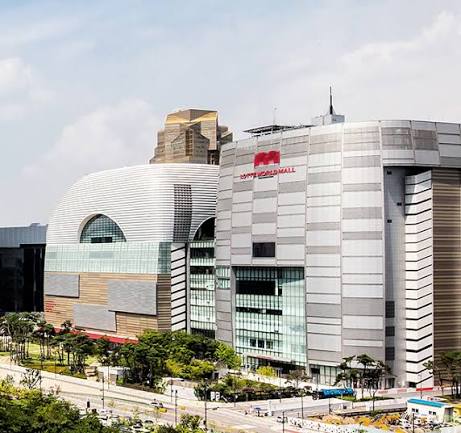
Exterior of Lotte World Mall
Lotte Duty Free is speeding up the overhaul of its overseas business, deciding to exit its Sydney downtown store and the Guam International Airport duty-free store. The Sydney downtown store ends operations on November 30, and the Guam International Airport store closes on December 20. The Sydney store is a case of pulling out with more than seven years left on the contract, while the Guam airport store was a symbolic location, secured in 2013 as the first overseas airport-wide duty-free concession won by a Korean company. These exits go beyond cleaning up a few unprofitable stores; they come closer to showing where Lotte Duty Free's overseas business makes money and where it loses it.
That said, Lotte Duty Free doesn't disclose overseas entity results in detail at the divisional level, so the figures below are compiled from press reports citing business reports and from industry reporting. Some figures may differ between reports because of rounding.
It Isn't One City — A Whole Business Model Is Being Wound Down
The overseas stores Lotte Duty Free has recently closed, or is closing, are as follows.
Store
Status
Note
Melbourne downtown store
Contract ended
End of 2024
Wellington airport store
Ended
February 2025
Darwin airport store
Wound down
Low-profitability store
Da Nang downtown store
Closed
Vietnam
Sydney downtown store
Closes Nov. 30
Opened 2022
Guam International Airport store
Ends Dec. 20
Did not bid in new tender
The Sydney downtown store opened in May 2022 in Sydney's central business district (CBD). It spans about 3,000 square meters across three floors, and at opening the company set a target of KRW 1 trillion in cumulative sales over ten years. But a slower recovery in Chinese tourist demand, heavy rent burdens, and currency swings combined to keep it from reaching the profitability it expected. The contract ran through April 2034, but an early exit was decided for the end of 2026.
The Guam International Airport duty-free store will likewise end operations on December 20 this year, as Lotte Duty Free did not take part in the tender for the new concession. Swiss-based Dufry has been conditionally selected as the successor operator.
Lotte Duty Free says it will concentrate resources on competitive airport hubs, weighing passenger demand, operating efficiency, and profitability.
Key Insight ① — The Three Disclosed Overseas Entities Alone Lost KRW 118.0 Billion
Based on IB Tomato's reporting, which draws on disclosures, most of the main entities that operate overseas stores, with the exception of Vietnam, are posting losses. The results for the Singapore, Australia, and Kansai entities, whose figures are available, are as follows.
Key overseas entity results (unit: KRW billion)
Entity
Item
2023
2024
2025
Singapore
Net income/loss
-9.6
-151.6
-22.9
Australia
Revenue
204.0
309.0
328.9
Australia
Net income/loss
-34.8
-43.6
-94.3
Kansai
Revenue
36.4
18.2
17.0
Kansai
Net income/loss
-3.1
-0.4
-0.8
Simply adding up the three entities' net losses gives -KRW 47.5 billion in 2023, -KRW 195.6 billion in 2024, and -KRW 118.0 billion in 2025.
The Singapore entity is the main reason losses were largest in 2024 and fell in 2025. The loss at the entity that operates the Changi Airport store shrank from KRW 151.6 billion in 2024 to KRW 22.9 billion in 2025.
That can't be explained by a business normalization alone, however. The company has said that 2024 included roughly KRW 90 billion in impairment losses on tangible and intangible assets. Excluding that, a simple calculation puts the 2024 loss at around KRW 60 billion. In other words, the 2025 improvement can be read as reflecting both the absence of a one-off cost and the effect of the business stabilizing.
Key Insight ② — In Australia, the More Revenue Grew, the Bigger the Loss
The most striking case is the Australian entity.
Revenue was KRW 204.0 billion in 2023, KRW 309.0 billion in 2024, and KRW 328.9 billion in 2025, growth of about 61% in two years. Over the same period, the net loss widened: KRW 34.8 billion in 2023, KRW 43.6 billion in 2024, and KRW 94.3 billion in 2025.
The net loss as a share of revenue was 17.1% in 2023, 14.1% in 2024, and 28.7% in 2025. The top line grew, but profitability actually worsened.
That said, these figures cover the Australian entity as a whole. They include the Sydney downtown store and the Brisbane and Melbourne airport stores, so the Sydney store's standalone results are unknown. There is no basis to claim that the wider 2025 loss was caused by the Sydney store.
Even so, looking at the Sydney exit decision together with rival DFS's exit from Sydney, it's fair to say that doubts about the profitability of the downtown duty-free model have been growing in recent years.
Keeping Only Airports Doesn't End the Problem
Lotte Duty Free's strategy is clear: wind down low-profitability downtown stores and refocus around airports.
The problem is that airport stores aren't turning a profit either. The Singapore entity, which runs only the Changi Airport store, is in the red, and so is the Kansai entity, which runs only the Kansai Airport store. Airport duty-free has the advantage of steady foot traffic, but its results swing widely with high rent, exchange rates, and shifts in travel demand — a structural limitation.
Industry observers do in fact see profitability pressure returning as rents, which were reduced during the COVID-19 period, normalize.
In the end, it's hard to say the Sydney and Guam exits mark the end of the overseas restructuring. Cutting the number of stores is only the beginning; the larger remaining task is whether the core airport hubs left can actually generate a profit.
What to Watch Next: Australia and Singapore in 2026
Looking at the duty-free business as a whole, Hotel Lotte's duty-free division has made it back to profit. But the overseas local entities remain a drag on consolidated earnings.
There are two main indicators to check going forward. First, whether the Australian entity's loss actually narrows after the Sydney downtown store's exit. Second, whether the Singapore entity can get close to profit without one-off costs such as impairment losses.
If neither entity improves, the likelihood rises that the problem lies not in individual stores but in the overseas airport duty-free business model itself. If results clearly improve, on the other hand, Lotte Duty Free's strategy of selection and concentration will have proven itself.
The Sydney and Guam exits are the beginning, not the end. Whether the overseas overhaul succeeds will depend on how quickly the remaining airport hubs can restore profitability.
✦RIT's Insights
There's no need to read this restructuring as abandoning overseas business, but the weight of overseas entities in consolidated earnings is going to be the key metric from here. Whether the Australian entity's 2026 results improve without the Sydney store, and whether the Singapore entity gets close to profit without one-off costs, will have to be checked in next year's business report. It's also interesting that only the Vietnam entity is profitable; it's worth breaking down how a model built on local partnerships differs from one that depends on airport rent. And how much exit costs or early-termination penalties will hit 2026 earnings is not yet known.
Combined three-entity results, net-loss-to-revenue ratios, and the Singapore 2024 loss excluding impairment are calculated from figures cited in the reports above (sums and back-calculations; rounding error possible)
DART electronic disclosure system (dart.fss.or.kr) — Hotel Lotte 2025 business report (individual filing URL not identified; document name only)